
One of the key aspects of Google Search is its ability to offer the most relevant results in the shortest amount of time.
This efficiency is enabled by advanced algorithms and the use of artificial intelligence (AI), which help Google quickly analyze and rank information.
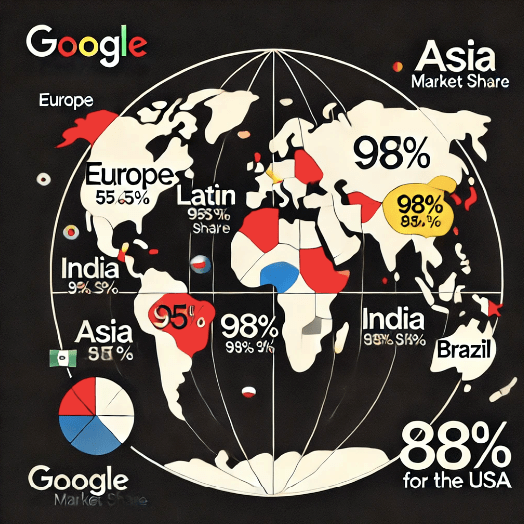
Today, Google Search is the primary tool used by more than 92% of users worldwide. On average, every company operating online receives up to 53% of its total traffic through search engines, with Google leading among its competitors.
In some countries, this percentage is even higher.
In countries like India and Brazil, Google is the undisputed leader, reaching about 98% of internet users. In the United States, Google also maintains a strong position with a market share of 88%, making it the main source for attracting customers.
The better your website is optimized for search algorithms, the higher its chances of appearing at the top of search results, directly impacting customer flow and sales volumes. In this article, I will explain how Google Search works and what to focus on to improve your business’s visibility online.
The Logic of Google Search: Crawling, Indexing, and Ranking
To engage in website promotion on Google, it is important to understand how the search process works: crawling, indexing, and ranking. These three stages are the fundamental steps that every website goes through to appear in search results.
Crawling
However, sites with regularly updated content and a large number of authoritative external links are crawled more frequently and quickly.
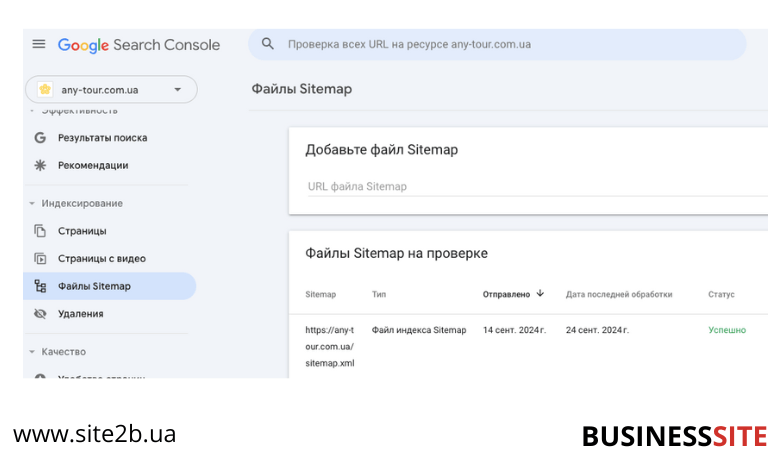
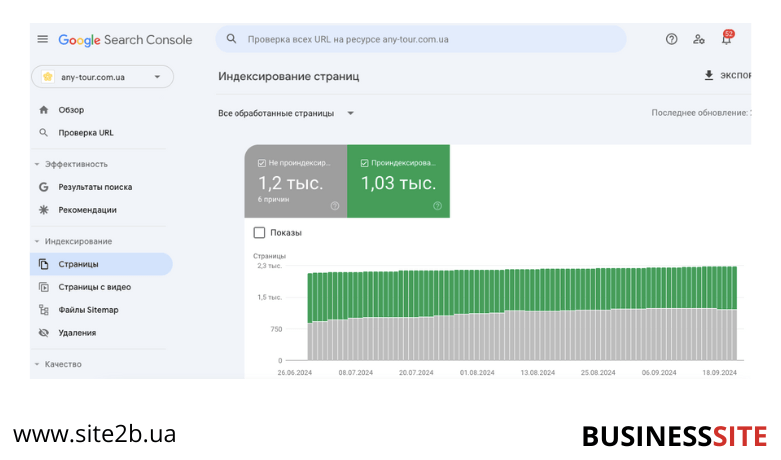
To track how Google is crawling your website, you can use the Google Search Console tool. This free service allows webmasters to:
- Monitor the crawling and indexing process of their website.
- Identify any issues that may arise during crawling (such as 404 errors, blocked pages).
Indexing

Key points in indexing:
- Keywords: Google determines which terms on the page are most important to use for ranking in searches.
- Metadata: Page titles (title), descriptions (meta descriptions), and other technical elements play a role in indexing, helping search engines understand the content of the page.
- Images: The search engine also indexes images, considering their names and alternative texts (alt tags).
Ranking in Search Results
Once a page has been indexed, the search engine determines which pages to show at the top positions for each specific query. This process is called ranking. Google’s algorithms consider hundreds of factors to provide users with the most relevant results.

Factors that influence ranking:
- Relevance. Google analyzes how well the content of a page matches the user’s query. This includes keywords, page context, and its overall content.
Example: If a user is searching for breaking news, Google’s algorithms will prioritize pages with the latest updates.
- Domain Authority. Google’s algorithms analyze how many other websites link to yours. Links from authoritative sources improve your page’s ranking because they increase trust in your site.
Example: A site with numerous links from reputable resources (such as news portals or large organizations) will rank higher than a site with fewer such links.
- User Experience (UX). Google places great importance on how users interact with a website. Key UX factors include:
- Page load speed: slower websites have less chance of ranking high because users tend to leave such pages quickly.
- Mobile optimization: a site optimized for mobile devices is prioritized since most searches are done on mobile devices. Google recommends following the Mobile First principle when designing a website.
- Site structure: easy navigation and quality design improve user experience, which also positively affects ranking.
- Content. High-quality content is one of the most important factors for ranking. Google evaluates how well a page provides valuable and useful information to the user, as well as the uniqueness of the content.
Example: Websites with unique expert articles on a topic have a better chance of ranking at the top than pages with duplicate or non-original content.
- User Interaction with Results (Pogo-sticking). If users frequently return to search results after visiting a page, this signals to Google that the page may not match the query, potentially lowering its ranking.
Google Search Algorithms and Their Updates

The algorithms, such as Google Panda, Penguin, Hummingbird, RankBrain, and Core Web Vitals, evaluate websites based on various parameters to determine their usefulness and quality. These factors must be considered when developing an SEO strategy to ensure your website’s visibility and high ranking in search results.
- Google Panda (2011)
The Panda algorithm was developed to combat low-quality websites that manipulate search engines by creating large volumes of poor or duplicate content. Panda focuses on evaluating the quality of pages and content, lowering the rankings of sites that create texts solely to rank high without providing real value to users.Example: If a site is filled with articles that overuse keywords or feature unoriginal content, Panda will lower its ranking. In the BUSINESS SITE team projects, we always ensure that clients’ content is unique and useful to end-users, helping avoid negative consequences from Panda. - Google Penguin (2012)
Penguin targets low-quality links and manipulative link-building schemes. In the past, some websites increased their link count by buying or participating in dubious schemes, allowing them to rank high in searches. With the introduction of Penguin, such practices became punishable, and sites that engaged in unfair strategies were downgraded in searches.Example: If a website uses purchased or low-quality links extensively, it will result in lower rankings in search results. At BUSINESS SITE, we ensure high-quality and organic link-building to avoid penalties from the Penguin algorithm and maintain a high ranking for our clients’ websites. - Google Hummingbird (2013)
Hummingbird was a significant milestone in the evolution of Google Search because it began focusing on the context of the query, not just individual keywords. This allowed Google to better understand user intentions and improve the relevance of results, offering pages that not only contain the required keywords but also match the context and meaning of the query.Example: A query like “where to buy the best sneakers” now returns not only pages with the keyword “sneakers” but also lists of the best sports stores, recommendations, rankings, and reviews, improving the user experience and helping Google better satisfy queries. - RankBrain (2015)
The RankBrain algorithm was Google Search’s first implementation of machine learning technology. RankBrain helps better understand unusual or complex queries that were previously difficult for algorithms to interpret. RankBrain analyzes user behavior and, based on collected data, improves query results.Example: If users frequently choose the same result when searching for a particular query, RankBrain will push that page higher in the rankings. This helps improve the relevance of results for each user. - Core Web Vitals (2021)
The Core Web Vitals algorithm is designed to improve user experience by assessing the technical characteristics of a website. It includes metrics such as:- Page load speed (Largest Contentful Paint, LCP),
- Interactivity (First Input Delay, FID),
- Page layout stability (Cumulative Layout Shift, CLS).


These metrics have become an important ranking factor, especially for mobile users. Websites that load slowly or have interactivity issues are downgraded in search results.Example: Quickly improving load speed by 1 second can boost a site’s rankings since users, especially on mobile devices, tend to abandon slow pages. At BUSINESS SITE, we focus on optimizing clients’ websites for Core Web Vitals to increase their visibility in search results.




Geographical Features of Search: Examples from Different Countries
Depending on the country, user preferences, popular search queries, and competitive environments can vary significantly. Let’s look at examples from several countries:
- USA: Innovation and Market Dominance
Google is the undisputed leader in the US search engine market, with a share of around 88%. Unlike other countries where competition is noticeable, Google remains nearly monopolistic in the US, competing only with smaller players like Bing and Yahoo. In the US, there is also a growing trend of using voice search, particularly through devices like Google Home and mobile phones with Google Assistant. Additionally, local search features such as “restaurants near me” are highly valued by users.

 Example: Voice searches and local queries (“where is the nearest café?”) are gaining popularity, especially among mobile users.
 - South Korea: Competition with Naver and Search Result Specifics
In South Korea, Google faces strong competition from local search engines such as Naver and Daum. Despite this, Google continues to grow its market share by offering more precise and less ad-heavy search results. Unlike Naver, where ads often dominate, Google provides a cleaner and more organized search experience, making it popular among those seeking factual information without excessive content. - Japan: Localization and Cultural Queries
In Japan, Google Search leads among mobile users. Queries related to culture, such as anime, manga, pop culture, and sports, are especially popular. Search queries in Japan often reflect seasonal and cultural events, with queries about festivals or Japanese celebrities occupying significant space in search results.

 Example: Queries related to local holidays or sporting events, like baseball, one of Japan’s most popular sports, are prevalent.
 - Spanish-speaking Countries: Growth of Mobile Search
In Spain and Latin America, Google retains almost complete monopoly in the search market, with over 95% market share. Users here actively use Google to search for news, weather, shopping recommendations, and entertainment. Thanks to extended mobile support, Google is steadily increasing its audience among users who increasingly rely on smartphones for searching.

 Example: Popular queries in Spain often involve tourism, music, local news, and sports events.
 - Germany: Emphasis on Security and Fact-checking
In Germany, Google dominates the search market, with German users actively searching for accurate and verified facts. Google collaborates with local fact-checking organizations such as BR24 and CORRECTIV to combat misinformation.

 Example: German users are often interested in facts related to political events and social issues. Google actively supports fact-checking in news and political statements.
 - France: Culture and News Consumption
In France, Google is a key player in the market, although, like in Germany, users here place great importance on news and reliable sources. French users often search for cultural events, including concerts, films, and festivals, and are also very engaged with political developments.

 Example: Queries related to culture (for instance, “concerts in Paris” or “latest movies”), as well as active searches for news and verified facts in the political sphere.
Artificial Intelligence and Its Role in Google Search
Over the past few years, Google developers have been actively integrating artificial intelligence (AI) and machine learning into their algorithms to improve search quality and make it more relevant and personalized for each user.
- RankBrain: Artificial Intelligence in Action
One of the first major implementations of AI in Google Search was RankBrain, launched in 2015. RankBrain uses machine learning to process and interpret complex or unfamiliar queries. It helps the system better understand user intentions and adjust search results, even if the query is entered in an unusual form or contains rare terms. RankBrain analyzes past query patterns and user behavior to offer the most relevant results.Example: If a user enters a query like “where to find comfortable work sneakers for office wear,” RankBrain can interpret the query, understanding that the user is looking for comfortable shoes for long-term wear at work. The algorithm analyzes similar queries and user behavior to offer the best results, even if the phrase is not standard.

RankBrain also plays a key role in improving the accuracy of searches for rare queries where there may not be an exact keyword match. For instance, if a query contains synonyms or abbreviations, the system can identify relevant results based on overall meaning rather than just keywords. - Search Prediction and Query Completion
AI in Google is actively used to predict queries even before the user finishes typing. Based on previous searches, popular trends, and location, Google can suggest auto-complete options that simplify and speed up the search process.Example: If a user starts typing “best restaurants,” Google may suggest auto-completions like “best restaurants near me” or “best restaurants for family dinner.” AI analyzes previous searches and behavior from similar users to suggest the most likely and popular query completions.

These features are especially useful for mobile users, as they save time and help select the most relevant search option immediately. - Natural Language Processing (NLP) and BERT
One of the most significant advancements in AI was the implementation of the BERT (Bidirectional Encoder Representations from Transformers) technology in 2019. BERT allows Google to better interpret complex queries by understanding the context and meaning of individual words and phrases, something earlier algorithms could not do. Unlike previous algorithms that just compared keywords, BERT takes into account how one word affects the meaning of another, improving the understanding of queries, especially those that are longer and more contextually nuanced.Example: If a user enters the query “a place for vacation near London to visit in autumn,” BERT helps Google understand that it is important not just to suggest vacation spots, but to focus on those relevant for autumn and located near London. The algorithm analyzes the entire context of the query to offer the most relevant options.

This technology has significantly improved search results for long and detailed queries, which often contain complex formulations or require an understanding of linguistic subtleties. - AI for Analyzing Content Quality
AI is also actively used to assess the quality of website content. Google analyzes many metrics, including:- Time users spend on a page,
- Bounce rate (pogo-sticking),
- Click-through rates (CTR).


These data help Google’s algorithms determine how useful and relevant the content is for users. If users frequently leave a page soon after opening it, this signals to Google that the content may not meet expectations.Example: If a page receives a lot of traffic but users quickly return to the search results, it may indicate that the content does not answer their questions or is of low quality. In this case, Google may lower the page’s ranking in search results. AI helps Google automatically improve the relevance of results, making search more accurate and personalized for each user.
Security and User Protection in Google Search
In addition to focusing on convenience and the quality of its search results, Google places great emphasis on user security and data protection. Every year, these requirements become more stringent, and Google introduces increasingly sophisticated mechanisms to protect users from malicious sites, fraud, and unwanted content. Here are the key measures Google applies to safeguard its users:
- Fighting Malicious Sites and Phishing
Google has developed a system that automatically scans websites for malicious software, viruses, and suspicious content. If the system detects a site with dangerous content, it either warns the user or completely blocks access to the site. Such websites are marked in search results as unsafe.

 Example: If a site is infected with a virus or engages in phishing (stealing user data through fake sites), Google adds a warning that the site may pose a threat. This reduces the likelihood of users visiting such a site, which, in turn, motivates webmasters to promptly fix the issue.
 - Blocking Spam and Low-Quality Pages
Google constantly improves its algorithms to combat spam. Malicious and fraudulent pages created solely to occupy space in search results, without offering real value to users, are either downgraded or blocked. Google uses machine learning technologies to analyze such sites and prevent them from appearing in search results.

 Example: If a website excessively uses keywords or is automatically generated, Google identifies this and downgrades the ranking of such pages, making search results more useful for end users.
 - Fact-Checking and Fighting Misinformation
Google actively collaborates with independent organizations to fight fake news and misinformation. In some countries, Google works with local partners like BR24 and CORRECTIV in Germany, who specialize in fact-checking. This helps prevent the spread of false information and ensures that users receive only accurate data.
 Example: Google provides journalists and editors with tools to label verified facts, which are displayed in search results. This helps users distinguish between true and false information and improves the quality of content available online.
 - Data Encryption (HTTPS)
Google requires websites to use HTTPS encryption, which protects user data during transmission over the internet. This makes browsing safer since attackers cannot intercept user data. If a site does not use HTTPS, Google warns users that their data may be at risk, and such sites have a lower chance of appearing at the top of search results.

 Example: If a site has not switched to HTTPS, Google may lower its ranking, and users will see a warning that their data may be unsafe. This makes encryption an important part of an SEO strategy and site security.
 - Protection from Phishing and Social Engineering
Google also warns users of potential phishing threats — attempts by fraudsters to obtain personal information, for example, through fake websites or fraudulent emails. When such attempts are detected, the system warns the user or blocks the site.

 Example: If Google detects a site trying to trick users into giving up their passwords or personal data, the system flags it as dangerous and displays a warning in search results.
Promoting Business in Google Search
Google Search is one of the most powerful tools for attracting traffic and growing businesses online. To successfully compete and rank high in search results, companies must follow modern SEO promotion trends and leverage Google’s opportunities to promote products and services. Modern Google algorithms are increasingly focused on content quality, user experience, and emerging technologies like voice search, video content, and the E-A-T principles (Expertise, Authoritativeness, Trustworthiness).

Modern SEO trends emphasize the following key aspects:
- Keywords and Content. The most important part of SEO remains the correct selection of keywords. Content must be relevant and useful to the user. However, today Google focuses not only on exact keywords but also on the semantic match between queries and page content. Algorithms strive to offer pages that answer queries as accurately and deeply as possible.

 Example: If a website sells cosmetic products, it should not only mention keywords like “buy cosmetics” but also provide expert recommendations, product reviews, usage instructions, and other valuable materials, so that Google can recognize the page as an authoritative source of information.
 - Technical Optimization and User Experience. Modern SEO requires a focus on the technical side: page load speed, mobile optimization, and proper site structure are crucial. If a site is slow to load or difficult to navigate, its rankings in search results can drop.
 Example: A site optimized for mobile devices and loading in 1-2 seconds will have an advantage in search results. This is especially important given the growth of voice search, which most often takes place on mobile devices.
 - Link-Building Strategy. Links from authoritative websites remain an important part of SEO. However, Google’s algorithms are increasingly focused on link quality rather than quantity. Link building should be organic, and links should be relevant and from trustworthy resources.

 Example: In the BUSINESS SITE team projects, we apply link-building strategies only with verified sites that have high authority to increase trust in the website and its ranking.
 - Voice Search. In recent years, more and more users are using voice queries to search for information, especially on mobile devices and smart speakers. Voice search queries differ from text-based ones — they are more conversational and longer. This makes it important to create content that answers these types of questions. Google’s algorithms are adapting to these queries, giving businesses an opportunity to optimize their pages for voice search.

 Example: If your site offers repair services, it’s important to adapt content for voice queries such as “where to order kitchen repairs near me,” focusing on local results.
How Businesses Can Use Google for Growth
Google offers many tools that help businesses attract customers and increase sales. Proper use of these tools and SEO strategies allows for sustainable growth:
- Using E-A-T (Expertise, Authoritativeness, Trustworthiness)
Google actively evaluates the quality of content based on E-A-T (Expertise, Authoritativeness, Trustworthiness). This is especially important for sites that provide medical, legal, or financial information. Pages created by experts in their fields, with a high level of trust, receive higher rankings in search results.Example: For sites offering legal or medical services, it is important to demonstrate that content authors are experts in their field, and the site itself has a high level of authority and reliability. This can be done by mentioning the qualifications of the authors, publishing research, and including external links to reliable sources. - Video Content
Video content has become an integral part of modern SEO strategies. Google actively promotes video in search results, especially through the YouTube platform, which is the second most popular search engine globally. Videos not only attract users but also keep them on the site longer, which positively affects page rankings.

 Example: Creating educational videos, product reviews, or demo videos increases user engagement and improves search rankings. YouTube channels associated with a business help expand audience reach and drive traffic to the main site.
 - Google Ads and Paid Advertising
Paid advertising through Google Ads remains a powerful tool for attracting customers. It allows you to display ads to users actively searching for your products or services. This is particularly effective for quickly increasing sales.
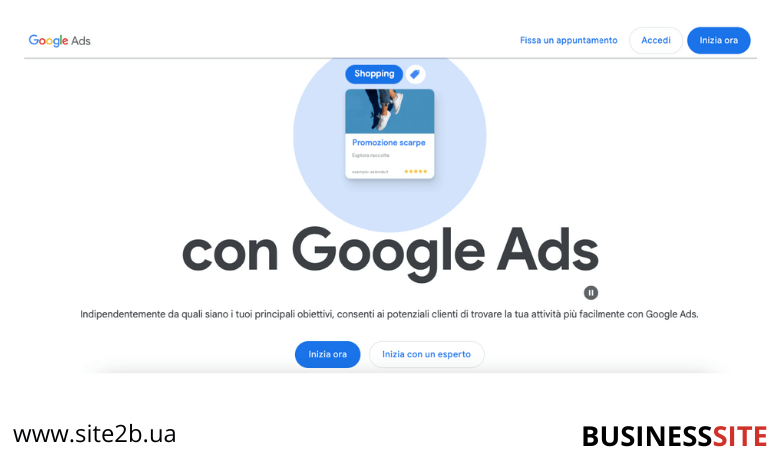 Example: Google Ads campaigns targeting the right keywords and local audiences can significantly increase sales and attract new customers in a short time.
 - Using Google My Business and Local Search
For local businesses, having a presence in Google My Business is essential. This improves visibility in local searches, appearing in results for “near me” queries and on Google Maps.
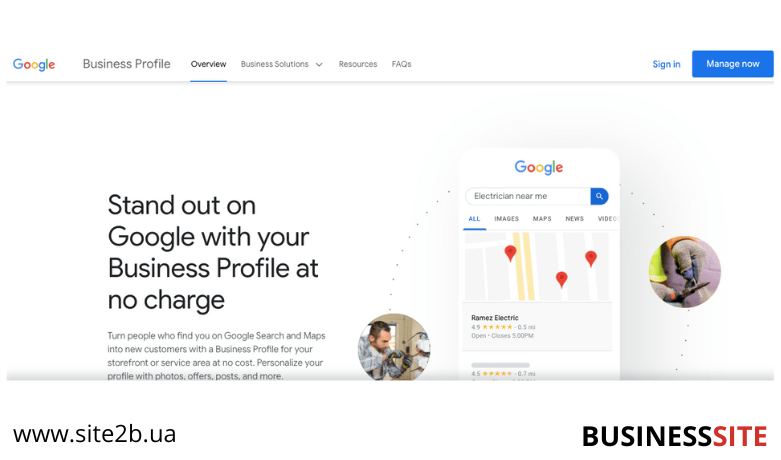 Example: If you own a restaurant, creating and actively managing a Google My Business page will allow you to attract more customers through local queries like “café near me.”
Conclusions and Recommendations
Key conclusions:
- High-quality content and technical optimization. Content must be relevant, unique, and useful to the audience. It is also important to focus on technical aspects: page load speed, mobile optimization, and site structure are key factors in ranking.
- Using voice search and video content. As voice queries and video content gain popularity, businesses need to adapt their websites and content strategies to meet these trends. Optimizing for voice search and creating YouTube videos can significantly boost website visibility.
- E-A-T and Authority. Google increasingly emphasizes the authority and trustworthiness of information sources. To build trust in your website, it is important to demonstrate expertise, publish quality materials, and receive backlinks from authoritative resources.
- Google Ads and Paid Advertising. The ability to quickly attract customers through paid advertising remains an essential part of a marketing strategy. Google Ads allows businesses to target users actively searching for their products or services.
- Local Search and Google My Business. For local businesses, having a Google My Business page is a way to attract customers from nearby areas, appearing in local search results and on Google Maps.
Recommendations:
- Regularly update and optimize content. Continuously work on improving your site and updating content, focusing on modern trends and the needs of your target audience.
- Use Google Analytics to analyze data. This tool helps track traffic, user behavior, visit sources, and conversions. Analyzing this data will allow you to optimize your site and marketing campaigns, making them more effective.
Example: You can find out which pages are the most popular and from which channels you receive the most traffic, then strengthen those areas.
- Invest in video content and voice search optimization. Videos and answers to long conversational queries attract more users and help improve your site’s visibility in search results.
- Use paid advertising. If you want to quickly increase traffic, Google Ads is an effective tool. Set up ad campaigns for key queries and local audiences to attract more customers.
Thus, effectively leveraging the capabilities of Google Search and regularly working on SEO will help your business successfully compete, increase visibility, and attract new customers.
Rate the article:





