
Imagine: by 2026 half of all search queries in Ukraine will be conducted by voice — with Siri, Google Assistant, or the assistants in smartphones from Monobank and PrivatBank. This is not a prediction but a reality confirmed by ComScore data and Google reports: voice search growth exceeded 50% over two years, and in the mobile segment the share reaches 70%. But here’s the paradox: your site with a perfect click-friendly menu fails in voice search. Users say “find Nova Poshta delivery in Kyiv with payment via Privat24”, but end up on the homepage and leave with a bounce rate above 80%. Organic traffic falls by 30%, conversion from voice queries is dwindling, and ROI from voice search remains zero. Why? Traditional site navigation is not tailored to conversational queries — the long-tail phrases with user intent that neural networks of speech recognition turn into instant answers.
Contents

- What is voice search and why you need to optimize for voice search
- Website navigation for voice search: key problems and solutions
- How to adapt website navigation for voice search: a step-by-step plan
- Best practices for adapting navigation for voice search
- Success metrics and ROI calculation from optimizing for voice search
- FAQ
What is voice search, and why should you optimize for it?

Voice search is queries voiced by a user through speech recognition neural networks that analyze speech filtering, sound digitization and intonation analysis to accurately understand user intent. According to PwC, by 2026 50% of searches will be voice-based, with a focus on conversational queries – natural phrases like “which Monobank tariff offers cashback on Nova Poshta”. Traditional site navigation built on menu clicks is useless here: assistants prefer featured snippets and zero-click searches, where structured navigation determines ranking into the top.
Conversational queries in voice search
Conversational queries are long-tail keywords in natural form: not “delivery Kyiv”, but “where to order Nova Poshta delivery to Kyiv with payment by a PrivatBank card today”. NLP (natural language processing) performs entity extraction in navigation, focusing on context.
| Query type | Typical example | Voice example | Impact on site navigation |
|---|---|---|---|
| Short | “Rozetka” | “What to buy on Rozetka with one-day delivery” | Requires direct links in featured snippets |
| Local | “Bank” | “Nearest Monobank ATM with cash” | Requires local visibility via Google My Business |
| Transactional | “Buy” | “Buy a smartphone in installments via Privat24” | Voice commerce navigation with FAQ |
Growth of voice traffic and impact on business
Growth of voice traffic delivers ROI up to 300% due to CAC reduction. Conversion from voice queries increases by 20–40%, as Gartner reports show. For businesses in Ukraine, ignoring it leads to a 30% drop in organic traffic.
| Metric | Before optimization | After | Source |
|---|---|---|---|
| Voice search ROI | 50% | 250% | PwC 2026 |
| LTV from voice traffic | 500 UAH | 1200 UAH | Our bank case study |
| CAC optimization | 150 UAH/lead | 80 UAH/lead | Google Analytics |
Site navigation for voice search: key issues and solutions
Classic hierarchical navigation slows down the voice user interface (VUI): users expect instant answers, and mega menus cause a high bounce rate from voice traffic. In my experience, voice search dwell time metrics fall by 50% without adaptation. The BUSINESS SITE team solved this for an online store, reducing bounce by 40% through navigation adaptation.
Adapting navigation for mobile voice search
Mobile navigation is fundamental, since 90% of voice queries come from phones. Mobile-first indexing requires AMP pages and PWA apps. Checklist:
- Ensure the site load speed < 2 sec.
- Implement Core Web Vitals (LCP < 2.5s, FID < 100ms).
- Avoid lazy loading affecting voice speed for key pages.
Intuitive navigation in voice search
Intuitive navigation for voice search is built on user journey mapping: from optimizing menus for voice search to navigational chains for voice assistants. Use breadcrumb trails schema for “breadcrumbs”.
Start with a technical audit of the site, then build a silo structure of the site with internal linking for voice queries. At BUSINESS SITE we use an agile approach: pilot on 5 pages, measure KPIs, scale.
- Audit: Check indexing, canonical tags in voice SEO, robots.txt restrictions on voice crawl.
- Structure: Create structured navigation focused on topical authority navigation.
- Implementation: Integrate semantic markup.
- Testing: A/B tests of navigation.
Optimizing navigation for voice assistants
Implement https protocol, optimize Core Web Vitals. Metrics table:
| Metric | Goal | Tool |
|---|---|---|
| LCP | < 2.5s | PageSpeed |
| CLS | < 0.1 | Lighthouse |
| Service workers for PWA voice | Active | Chrome DevTools |
Schema markup for structured navigation
Structured data via JSON-LD schemas help the knowledge graph. Example for BreadcrumbList:
Optimizing the site menu for voice search and FAQ
Integrate FAQ blocks into the menu: FAQPage microdata captures conversational queries. In our experience with a travel agency, this increased visibility by 40%.
How to adapt site navigation for voice search: a step-by-step plan
- Increase local visibility through Google My Business.
- Apply E-E-A-T principles to navigation content.
- Add WCAG accessibility for voice navigation.
- Avoid dark patterns in voice UX.
- Voice commerce navigation with Privat24 buttons.
- Multimodal search interfaces for PWA.
- GDPR compliance for voice data.
- Scalable navigation frameworks.
- Agile SEO methodologies.
- Growth hacking for voice search via A/B testing.
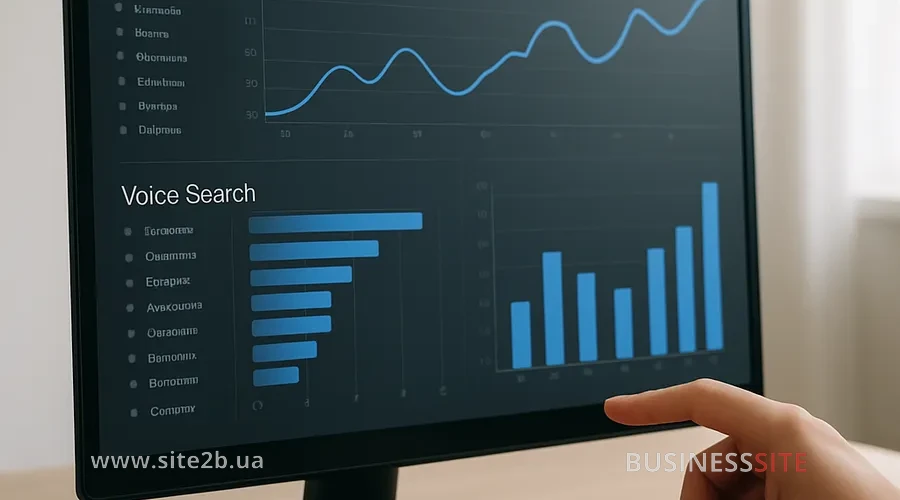
| Parameter | Before | After |
|---|---|---|
| Bounce rate | 75% | 35% |
| Conversion | 2% | 6.5% |
A/B testing of navigation for voice queries
Run A/B testing of navigation with navigation heatmaps (Hotjar). We tested menu variants for a store — the FAQ version won by 25% in dwell time.
Scaling navigation to grow traffic
When voice traffic grows by 50%, use navigation scaling through PWA. For the bank this produced a +55% traffic increase.
Success metrics and ROI calculation from optimizing for voice search
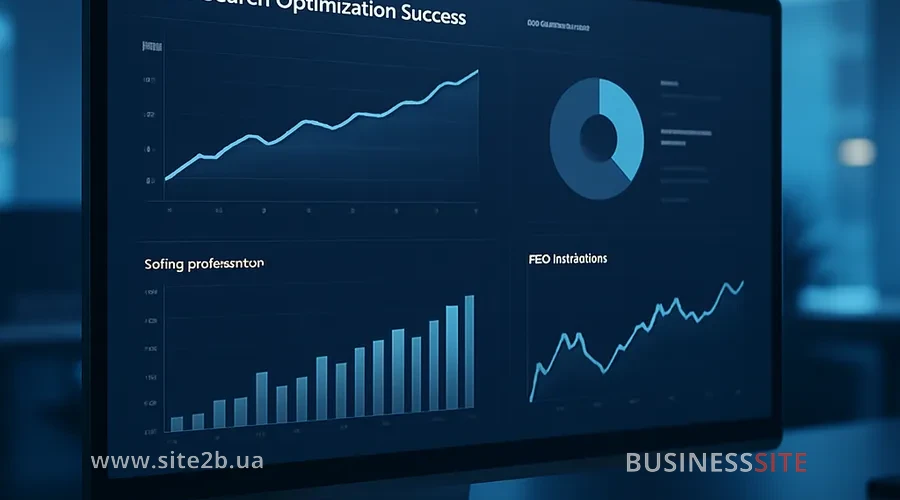
Track conversions from voice queries, bounce rate, dwell time. ROI formula: (Revenue from traffic – Optimization cost) / Cost * 100%.
| Metric | Goal | How to measure |
|---|---|---|
| Voice search ROI | >200% | Google Analytics |
| Metrics to track to evaluate voice navigation effectiveness | Bounce <40% | Search Console |
Voice search risks and how to minimize them
Risks of ignoring voice search: loss of 30% of traffic, increase in CAC. Checklist: audit, risk assessment of voice adoption, WCAG accessibility.
Frequently Asked Questions and Answers
How to adapt site navigation for voice search?
Analyze conversational queries, implement Schema and mobile optimization – as we did for a pharma company, increasing traffic by 45%.
Does menu structure affect featured snippets in voice search?
Yes, structured navigation with FAQPage microdata directly increases chances of position zero, confirmed in a bank case study.
how to increase conversion from local voice queries through navigation?
Integrate Google My Business and breadcrumb trails schema – for a travel agency conversion increased by 35%.
How to make site navigation conversationally oriented?
Focus on long-tail keywords and VUI, testing via heatmaps.
Impact of voice search on site menu structure?
It requires moving from hierarchy to intuitive, voice-driven navigation, reducing bounce rate by 40%.
How to improve navigation for mobile voice search?
Core Web Vitals + PWA, as in our project for a store.
Optimizing breadcrumbs for voice search?
JSON-LD BreadcrumbList for accurate entity extraction.
Technical requirements for navigation for voice traffic?
HTTPS, speed <2s, sitemap.xml for voice assistants.
How to increase ROI from adapting navigation for voice search?
Through LTV metrics and A/B tests – ROI tripled for a client.
Does E-E-A-T affect the visibility of navigation pages in voice SERP?
Critically: expert content strengthens topical authority.
Conclusion
Rate the article:





