
With the cloud technology market growing at 20% annually, companies worldwide are striving for digital transformation, and Google Cloud Platform (GCP) is one of the leaders in this market. Today, more than 11% of companies globally use GCP, including giants like PayPal, eBay, and 20th Century Fox, making it the third-largest cloud provider after AWS and Microsoft Azure.
GCP offers small and medium-sized businesses the same highly reliable and scalable technologies that global leaders use. The benefits are clear: access to the same infrastructure that powers Google’s global services, including Gmail and YouTube, as well as the flexibility to scale IT resources in real time, reducing costs and increasing efficiency.

With data analytics tools like BigQuery and machine learning solutions like AutoML, your business will be able to quickly process vast amounts of information and discover hidden patterns that help make more informed business decisions. Moreover, with built-in security features, including access management through Cloud IAM and vulnerability monitoring through the Security Command Center, your data will remain safe, which is critical in today’s cyber threat landscape.
Main Components of Google Cloud Platform (GCP)
Google Cloud Platform offers a powerful set of business tools and services aimed at solving a wide range of tasks: from app development and hosting to data storage and big data analytics. Each GCP component serves a specific function, allowing companies to manage their IT infrastructure efficiently and scale their business in a global market.
Computing and Hosting
- Google Compute Engine
Description: This is an infrastructure service that provides virtual machines (VMs) for data processing and application workloads. Compute Engine allows companies to run and scale resource-intensive tasks and provides tools for automating and managing virtual machines.Advantages: Using virtual machines allows companies to significantly reduce costs on physical servers, paying only for the resources that are actually used.Example: Spotify uses Google Compute Engine to scale its music streaming services, processing billions of requests per day. The platform’s scalability helps the company maintain a high level of user service, even during sharp traffic increases.
- Google Kubernetes Engine (GKE)
Description: GKE provides container management using Kubernetes. This is a powerful tool for companies that utilize microservice architecture and need automatic container management and scaling.Advantages: GKE simplifies the deployment and management of containerized applications, offering automatic updates and scaling, as well as high availability.Example: The Home Depot, one of the largest home improvement retailers, uses Kubernetes Engine to manage its online services. During peak sales events, such as Black Friday, GKE automatically increases capacity to handle millions of real-time requests.
- App Engine
Description: This is a platform as a service (PaaS) that automatically manages application scaling based on its load. Developers do not need to worry about setting up and managing servers — all processes are automated.Advantages: Saves time and resources on setting up infrastructure, fully integrates with other Google Cloud services.Example: Snap Inc., the developers of the popular Snapchat app, uses App Engine for quick development and scaling of its applications. This allows them to add new features without delays and maintain high app speeds as the user base grows.

Data Storage
- Google Cloud Storage
Description: A cloud storage service for any type of data, from simple text files to large multimedia data. It supports multiple storage tiers, allowing users to choose between cheaper or high-performance solutions.Advantages: Flexibility in managing and storing large amounts of data. Availability and high performance for working with multimedia files, backups, and large archives.Example: Airbnb uses Google Cloud Storage to store images, videos, and other media files, improving the user experience when booking accommodation. The flexibility and speed of data storage allow the company to quickly deliver content to millions of users worldwide.
- BigQuery
Description: This is a data analytics platform for processing big data, allowing SQL queries on terabytes and petabytes of data in real-time. BigQuery is used for data analysis, report generation, and strategic business decision-making.Advantages: High data processing speed, the ability to work with large amounts of information in parallel without having to configure infrastructure.Example: PayPal actively uses BigQuery to analyze massive transaction data, improving the personalization of offers and enhancing payment security. Real-time data analysis allows PayPal to instantly respond to changes in user behavior.
- Cloud SQL
Description: A fully managed database service supporting MySQL, PostgreSQL, and Microsoft SQL Server. This solution helps companies deploy and scale databases with minimal effort.Advantages: Easy setup, automatic updates, and high security levels. Cloud SQL easily integrates with other GCP services, simplifying data management across the company.Example: Evernote, a popular note-taking and task management service, uses Cloud SQL to store user data, ensuring high performance and reliability as the user base grows worldwide.

Networking Solutions
- Virtual Private Cloud (VPC)
Description: VPC allows companies to create isolated networks for their cloud resources, providing high security and flexibility in network configuration.Advantages: Customizable access rules, the ability to integrate with on-premise networks, support for hybrid solutions.Example: Zynga, developers of online games, use VPC to ensure the security of their game servers and protect user data. High flexibility in configuration allows Zynga to maintain reliable connections between gaming platforms and servers.
- Cloud CDN
Description: A content delivery network (CDN) for accelerating the delivery of web content worldwide. By using globally distributed servers, Cloud CDN ensures minimal latency and high loading speeds for websites and applications.Advantages: Increased site loading speeds, improved user experience, especially for a global audience.Example: Spotify uses Cloud CDN to deliver music content to its users worldwide, ensuring instant access to millions of tracks without delays in streaming.

Data Analytics and AI Tools
- AutoML
Description: AutoML is a service that automates the creation of machine learning models. This solution is especially useful for companies that lack deep expertise in AI but want to harness the power of machine learning for data analysis.Advantages: Ease of use, support for various data types, automatic model creation and testing.Example: Urban Outfitters uses AutoML to analyze user behavior and predict product demand. This helps the company optimize inventory and improve customer service.
- Cloud Machine Learning Engine
Description: This service allows developers to train and deploy machine learning models on cloud infrastructure. It’s a powerful solution for complex tasks like prediction, classification, and image processing.Advantages: Ability to work with large data sets, automatic scaling, support for popular AI libraries like TensorFlow.Example: 20th Century Fox uses Cloud Machine Learning Engine to analyze movie trailers and predict their popularity among different viewer categories. This helps the marketing team create more effective advertising campaigns.

Advantages and Disadvantages of Google Cloud Platform (GCP)
When businesses choose a cloud platform, factors such as flexibility, security, and global infrastructure play a key role in decision-making. Google Cloud Platform (GCP) is one of the most advanced cloud ecosystems, offering a wide range of tools and services. However, like any solution, GCP has its strengths and weaknesses that must be considered.

Advantages of Google Cloud Platform
- Global Infrastructure
GCP uses one of the largest and most reliable global data center networks, enabling businesses to easily deploy and scale applications worldwide with minimal latency.
- Scalability and Flexibility
GCP automatically scales resources based on system load, helping minimize costs during periods of low demand and quickly increasing capacity during peak loads. This is especially important for companies with fluctuating workloads.
- Security
Google offers advanced security technologies, including Cloud IAM (identity and access management), Security Command Center for vulnerability monitoring, and DDoS protection. All of this ensures that your business data remains securely protected.
- Innovation
Google is known for its innovative solutions, including machine learning and data analytics. GCP actively integrates these technologies, allowing businesses to leverage the latest developments to optimize processes and make data-driven decisions.
Disadvantages of GCP
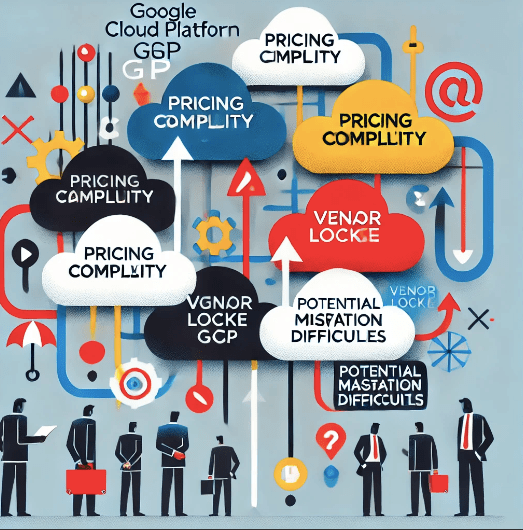
- Pricing Complexity
GCP service prices can vary depending on how often and intensively resources are used. This can be challenging for businesses without experience managing cloud infrastructures.
- Vendor Lock-In
Migrating from GCP to other platforms can be difficult and costly due to reliance on proprietary Google services and APIs.
Free Google Cloud Platform (GCP) Training
Google actively supports those who want to learn cloud technologies by offering free courses and training resources on platforms like Coursera, Qwiklabs, and Google Cloud Training. These programs are suitable for both beginners and experienced IT professionals looking to enhance their skills in cloud computing, machine learning, automation, and other technologies.
Who is this training for?
- Entry-level IT professionals: Free courses are ideal for those just starting their career in cloud technologies. Courses like Google Cloud Fundamentals will help you understand the basic principles of cloud operations and teach you how to deploy applications and manage data.
- Entrepreneurs and project managers: Courses will help business leaders better understand how cloud solutions can increase their companies’ efficiency, reduce infrastructure costs, and speed up product development.
- Technical specialists and DevOps: Experienced developers and engineers can expand their knowledge of services like Kubernetes Engine, BigQuery, and Google AI machine learning, opening up opportunities for more complex projects and big data optimization.
Leave your request!
Google Cloud Certification
In addition to basic courses, Google offers certification programs that allow for an in-depth study of cloud operations and officially confirm your knowledge. Google Cloud certification will help you stand out in the job market as it validates competence in areas such as cloud administration, application development, machine learning, and security.
The average salary of Google Cloud-certified professionals is about $110,000 per year for cloud architects and data engineers. Some positions, such as DevOps engineer or big data specialist, can earn even more — up to $150,000 per year, depending on experience and location.
Google aims to make education accessible to users worldwide, so Google Cloud courses are available in various languages, including Ukrainian. This opens up new opportunities for Ukrainian specialists, allowing them to receive education in their native language and apply new knowledge both locally and internationally. Training is available on platforms like Coursera and Qwiklabs, with Ukrainian subtitles and localized materials.
Conclusion
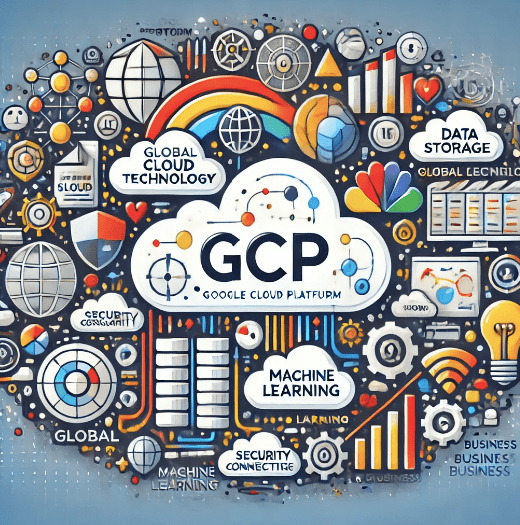
Google Cloud Platform (GCP) is a modern cloud platform that provides companies with tools and technologies to solve a wide range of business tasks. It covers key areas such as data storage, machine learning, big data analytics, application containerization, and security and infrastructure management.
Who is GCP for?
GCP is suitable for organizations of all sizes — from small startups to global corporations. For startups, GCP offers flexibility and the ability to start with minimal costs, paying only for the resources that are actually used. For large companies like Spotify, PayPal, and The Home Depot, GCP provides the capacity to scale and handle huge data volumes, as well as tools for process automation and artificial intelligence implementation.
The Importance of Data Analytics and Machine Learning
One of GCP’s key features is its powerful analytics platform, BigQuery, which helps businesses effectively analyze large amounts of data in real-time. This opens up new opportunities for creating competitive strategies and optimizing business processes. For example, companies can use machine learning through AutoML or Cloud Machine Learning Engine to forecast demand, improve customer service, or enhance products.
Security and Reliability
In today’s world, data security is of paramount importance. GCP offers advanced solutions for protecting information, such as Cloud IAM for access management and Security Command Center for vulnerability monitoring and preventing cyberattacks. This is especially important for companies dealing with sensitive data, such as in the banking or healthcare sectors.
Global Capabilities
One of GCP’s key advantages is its global infrastructure. With a network of data centers worldwide, companies can easily deploy applications and store data in various regions, ensuring low latency and high availability for users around the world. This is particularly relevant for international companies that require fast and reliable access to their services regardless of geographic location.
Impact on Business
GCP helps businesses optimize costs by simplifying infrastructure processes and offering scalability that allows growth without significant additional investment in IT resources. Moreover, leveraging the latest technologies like IoT and AI gives companies a significant competitive advantage, enabling them to respond quickly to market changes, improve operational efficiency, and drive innovation.
Rate the article:





