
80% of B2B leads from social networks are generated through LinkedIn: this metric is stable in international reports. At the same time, the average reply rate to properly personalized InMail messages for the teams I consult stays in the 18–32% range, and cost per meeting in outsourcing with a refined ICP drops below $200–350.
For Ukrainian outsourcing companies, LinkedIn provides a type of advantage appreciated by sales leaders: targeting by roles (CTO, Head of Product, VP Engineering), access to intent signals, and the ability to build social selling without aggressive spam. In my observations, B2B lead generation on LinkedIn outperforms cold calling on CPL and unsegmented Ads on MQL quality. Email is still strong, but the best results come from a multichannel approach: LinkedIn + email + Ads + webinars with a unified narrative.
Looking at the Ukrainian outsourcing market, demand is driven by companies from the US, Canada, DACH and Scandinavia. The leading roles are CTO/Head of Product for projects in AI/LLM, cloud, cybersecurity and fintech. Geographically, time zone selling suggests prioritizing the US East Coast and Central Europe for optimal overlap of teams’ working hours. The BUSINESS SITE team in such setups regularly gets above-median reply rate benchmarks when the ICP is described not by industry in general, but by pains inside subprocesses (for example, “AI-assisted fraud prevention in mid-ticket fintech”).
Practical takeaway: LinkedIn works best when you’re selling expert services with a clear outcome (PoC → pilot → scaling), have case studies, and are ready for personalized outreach. Time to first meetings: 2–4 weeks with a ready ICP and working profile content; scalability depends on the ABM approach, data quality and SDR/AE alignment.
How to determine ICP for LinkedIn
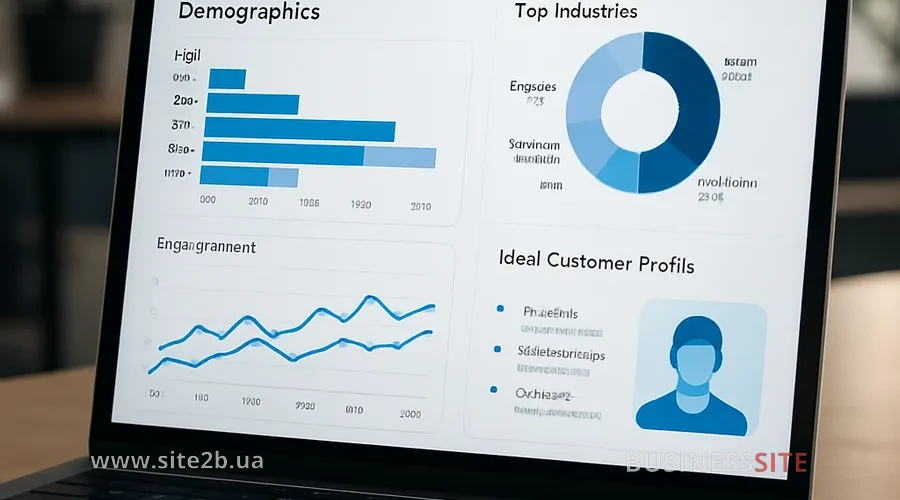
I believe that strong LinkedIn lead generation for IT companies doesn’t start with messages but with an accurate ICP. The template includes: industry, region, size (revenue/headcount), tech stack (AWS/GCP, React/Go, Snowflake, etc.), project type (migration, data platform, mobile, GenAI), budgets, growth stages and pain points (time-to-market, legacy, compliance).
Intent data and behavioral segmentation help refine the ICP. In Sales Navigator I pay attention to signals: hiring spikes, new investments, C-level changes, product launches. We also use lead enrichment services (Clearbit, Apollo) to add revenue, stacks and hiring channels. In CRM it’s important to record custom fields for the ICP in Pipedrive/HubSpot/Salesforce and set up automatic enrichment via webhooks.
How to collect data for ICP
- Sources: Sales Navigator Boolean search combining roles and stack, Clearbit/Apollo databases, clients’ public profiles and their job postings, competitive analysis of similar outsourcing companies. At BUSINESS SITE we often start with 50–100 reference accounts to extract the characteristics of the “best buyers”.
- ICP validation metrics: conversion to meeting (leads → meetings), cost per meeting, LTV by cohorts, as well as propensity to buy models. If conversion to meeting is below 6–8% during the test stage, I go back to the ICP hypotheses and adjust the signals and pain points.
Key: creating the ideal customer profile (ICP) for LinkedIn: it’s a living artifact. It changes as you receive new responses and objections, and should be formalized in the CRM (for example, Pipedrive custom fields for the ICP) for reporting and SDR training.
Account-based marketing on LinkedIn for large accounts
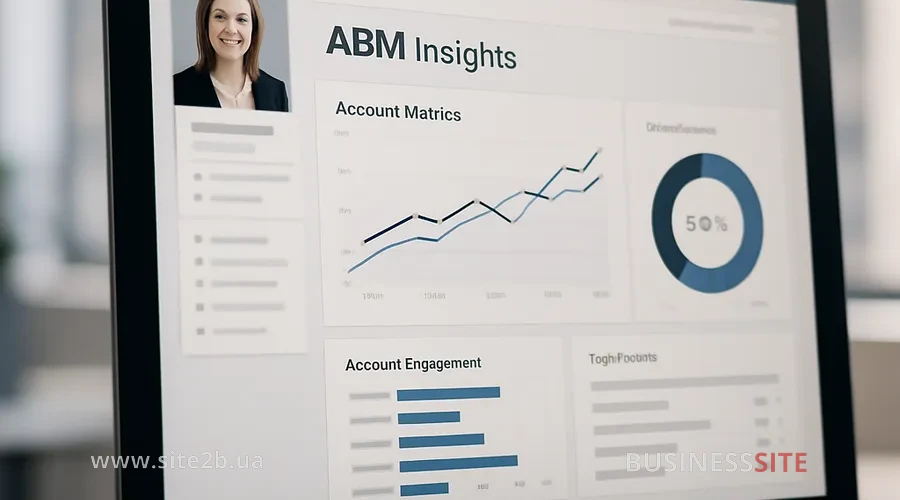
ABM is my choice for deals with a ticket size of $50k+ or involving multiple stakeholders. The structure includes: selection of priority accounts, role mapping (economic buyer, technical buyer, user), personalized value propositions, aligned SDR/AE roles, content and touchpoints. On the BUSINESS SITE, ABM through LinkedIn is strengthened by personalized InMail, targeted Ads, and employee advocacy, where leads’ profiles meet their language and context.
I recommend tracking both-touch and multi-touch attribution, because ABM is almost always multichannel.
Integrating ABM with Sales Navigator and CRM
Sales Navigator allows creating account lists and saving leads by role. We use tags and shared lists, syncing them with HubSpot/Salesforce via integrations. AE receives a handoff from SDR according to a clear checklist: contact history, key pains, content the lead viewed, and the next action. Such alignment reduces friction and increases win rate.
Finding clients on LinkedIn using Boolean
Advanced Sales Navigator is the basis for precise role targeting (CTO, Head of Product, VP Data). Complex Boolean queries help separate relevant candidates from noise. I set filters by geography, company size, industry, current tasks and growth signals. Saved Leads form daily SDR playlists — 30–50 new profiles per day with a high match to the ICP.
Examples of Boolean queries for outsourcing
- Roles: (“CTO” OR “Head of Engineering” OR “VP Engineering”) AND (“Fintech” OR “Payments” OR “Lending”).
- By tech stack: (“Head of Data” OR “Data Platform Lead”) AND (“Snowflake” OR “Databricks” OR “dbt”) AND (“hiring” OR “migration”).
- By product: (“Head of Product” OR “Product Director”) AND (“Mobile” OR “iOS” OR “Android”) AND (“outsourcing” OR “nearshore” NOT “agency”).
I add filters for company size 50–5,000 employees and region DACH/Benelux/US East to account for time zone selling. This approach improves accuracy and saves outreach sequence budget.
Cold messages and InMail for responses
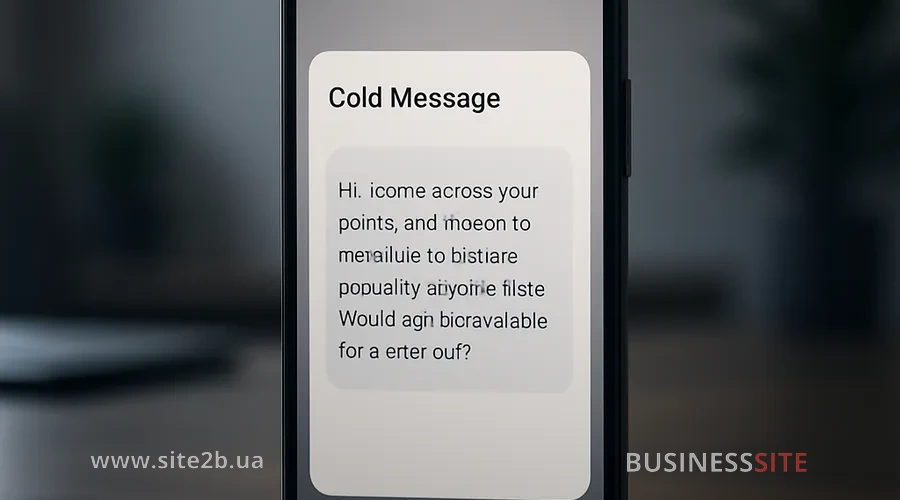
Effective cold outreach is built around a structure: a short subject, a hook based on an insight, a value proposition with business impact, social proof/case, a clear CTA and a follow-up cadence. At BUSINESS SITE we rely on value-based messaging, where it’s not about features but time-to-market, reducing CAC or improving NPS.
InMail strategies: 300–600 characters, personalized elements (mention of a relevant initiative), one CTA. Optimal sending time – during the recipient’s working hours, taking their time zone into account. We test A/B variants by length, tone, CTA wording and hook. Within the SDR group we use scripts and talk tracks to ensure a consistent standard and an easy handoff to AE.
A/B testing of messages
I record the hypothesis, the variable (hook, length, CTA), the segment and the duration. I compare reply rate, meeting rate, conversion to SQL. If the sample is small, I extend the time period or combine adjacent segments. It’s important to keep a learning backlog: which wordings gave the best InMail response rate and for which ICP.
Lead generation automation on LinkedIn
Automation speeds up work but requires discipline. I distinguish between “white” and “conditionally gray” methods: Phantombuster, Dux-Soup and Lemlist are useful for careful scaling, while direct access to the LinkedIn API is limited and requires compliance with the platform’s rules. BUSINESS SITE practice recommends daily action limits, randomization, natural pauses and prioritizing manual touches for key accounts.
Account security: critical. We take into account rate limits, LinkedIn’s anti-fraud mechanisms and combine automation with manual outreach. We build sequences without sharp spikes and monitor message deliverability, warming up profiles and maintaining a consistent SSI.
Risk management and compliance
I follow the principles of privacy by design: we record processing purposes, obtain consents, document processes, restrict access, and configure retention. For international data transfers we take into account the GDPR and Standard Contractual Clauses. We reflect Ukrainian requirements for the processing of personal data in the privacy policy and contracts with processors. We comply with LinkedIn’s anti-spam mechanisms, and set up data storage and deletion in the CRM with an action log.
Personalizing outreach with AI and LLMs
LLM personalization saves SDR hours and increases relevance. We use GPT-4 to generate personalized message templates, A/B variations and value-based hypotheses. NLP for response analysis helps classify intents, surface objections and speed up SDR response. Semantic search and embeddings make it possible to find similar cases and suggest relevant insights.
Next, predictive lead scoring. We train propensity-to-buy models to prioritize leads by likelihood of a meeting and a deal. Such sorting shifts SDR focus from volume to quality, increasing pipeline velocity.
Architecture of a vector database in CRM/CDP
In HubSpot/Salesforce/Pipedrive we configure rules: if score > threshold: a signal is sent to the SDR and a sequence is launched; if a lead shows intent signals, we activate ABM touchpoints. This loop makes AI-driven outreach optimization repeatable.
Multichannel: LinkedIn, email, ads, webinars
Multichannel campaigns increase conversion by diversifying touchpoints. I build a multichannel outreach framework: 10–15 touchpoints over 21–30 days, synchronizing messages and visuals. LinkedIn Ads and organic outreach together reduce CPL: Ads build awareness, while SDRs close the dialogue into a meeting.
Retargeting for visitors of the landing page and video viewers. Ukrainian companies can conveniently accept registrations via forms integrated with PrivatBank/MonoBank for paid workshops, and deliver materials via email or corporate chats.
UTM tags for campaign attribution
For correct attribution I set UTM tags and mark sources in the CRM. In analytics I compare last-click vs multi-touch attribution to see the contribution of LinkedIn touchpoints. This approach helps distribute the budget fairly: part to Ads for awareness, part to SDR, part to content.
Optimizing the profile for B2B leads
Optimizing the company LinkedIn profile for leads: a quick win. I update the company page with a focus on the ICP: industries, case studies, results, CTA to the landing page. Employee profiles reflect roles in the deal: the founder — vision and proof points, the tech lead — architectures and metrics, sales — case studies and testimonials. This increases trust and inbound conversion.
Content plan: thought leadership, case studies, short posts, video demos, AMA sessions. Employee advocacy and ambassadors amplify reach: personal profiles share case studies, comment on trends, and highlight culture and expertise. Metrics: engagement, inbound leads, conversion from content. On the business site this content often becomes a deciding factor in the final selection of a vendor.
Employee advocacy and SSI program
We train employees to write without clichés, maintain the tone of voice and record results in reports.
Setting up outreach for SDR on LinkedIn
Roles: SDR is responsible for research, touches and qualification; AE — for discovery, demos, and the commercial proposal. Handoff happens via a checklist and on time. KPI: meetings per week, SQL, reply rate, cost per appointment and cost per meeting.
Sequence cadences I build taking channels and personalization into account: LinkedIn connect → short message → InMail → email → content touch → follow-up call. Team training includes objection handling, talk tracks on value, CRM work and triggers for follow-up. Practice at BUSINESS SITE shows: a unified standard increases MQL→SQL conversion.
Scaling the team and automating routine tasks
Scaling an SDR team without increasing CPL is achieved through standardized onboarding, a template library, unified reports and careful automation of routine tasks (reminders, enrichment, task creation).
CRO and CPL in LinkedIn Ads and landing pages
In Ads I recommend role-based campaigns (CTO, Head of Product), remarketing and lookalike audiences based on MQL/SQL lists. We test creatives with value-based messaging and social proof. CPL optimization in LinkedIn Ads is achieved through segmentation and a clear offer.
Landing pages for LinkedIn traffic require CRO discipline: a clear headline, value proposition, case studies, a short form, possibly gated content. A/B tests on headlines and CTAs deliver quick improvements. KPIs: CPL and CAC calculations, cost per meeting, conversion to SQL. I budget with a buffer for the learning phase, setting a target CPA per meeting.
Measuring effectiveness: MQL, SQL, ROI
Clear definitions of MQL vs SQL for outsourcing remove disagreements between marketing and sales. I define an MQL by ICP fit and interest (content/response/registration), and an SQL after discovery validation of need and budget. Metrics: pipeline velocity (time from MQL to Closed Won), LTV, cost per lead, cost per meeting, CPL and CAC.
Атрибуция: для длинных циклов рекомендую multi-touch и моделирование contribution канала. Для быстрых тестов – last-click, чтобы не тормозить решения. Измерение ROI LinkedIn-кампаний для IT-аутсорса основываем на закрытых сделках и влиянии на pipeline.
Setting up reporting in CRM
In reports I include: lead sources, UTM and LinkedIn traffic tracking, conversions by stage, MQL→SQL checklist, cost per touch. Automated dashboards show KPI attainment, velocity by stage and bottlenecks. This control helps to promptly adjust messaging and the ICP.
Outbound case studies for Ukrainian outsourcers
Case 1. Fintech, United States.
Goal: meetings with VP Engineering/CTO for an anti-fraud PoC.
Tactics: Sales Navigator + Boolean, personalized InMail, remarketing ads, 18-day sequences.
Result: reply rate 27%, 19 meetings in 6 weeks, CPL $82, cost per meeting $235. Lesson: mentioning regulatory requirements and specific metrics reduced friction.
Case 2. HealthTech, DACH.
Goal: pilots for migration to a HIPAA-ready cloud.
Tactics: ABM, employee advocacy from an architect, a webinar analyzing the case, gated content.
Result: meetings per account 1.6, deal velocity decreased by 22%. Conclusion: involving technical leads as ambassadors strengthened trust.
Case 3. E-commerce tools, UK.
Goal: reaching Heads of Product at companies with GMV $5–50M.
Tactics: LLM personalization, semantic matching of case studies, short video demos.
Result: InMail response rate 31%, conversion to SQL 14%. Lesson: a video touch before InMail increased interest.
Templates: message scripts for LinkedIn SDRs
– Signal-based hook: “I see you’re expanding the data team and implementing Snowflake. We helped a similarly sized team reduce pipeline costs by 28% in 10 weeks. Would it make sense to discuss 15 minutes next week?”
– Value-oriented: “How have you solved time-to-market for mobile releases? We remove CI/CD bottlenecks without increasing headcount. Ready to share concrete numbers and a plan.”
– Case study: “Projects with variable load often pay for idle capacity. We migrated peak traffic for a retailer: -34% on the bill, SLA preserved. Would you like a short breakdown?”
– Objection handler: “If it’s not a priority right now, I’ll leave a migration checklist — it will be useful for planning. Can I send it?”
– Handoff to AE: “Our architect colleague is ready to show a reference architecture in a 20-minute call. Is Tuesday/Thursday convenient?”
Testing and A/B testing in LinkedIn campaigns
A structured hypothesis test in LinkedIn campaigns looks like this: we formulate a hypothesis, choose a success metric (reply rate, meeting rate, SQL), set the sample and duration, and fix the winner criteria. I use growth frameworks for B2B to manage a backlog and scale successful ideas.
Examples of tests: message cadence (5 vs 8 touches), InMail length (350 vs 550 characters), LLM personalization vs manual customization, different value anchors. AI-driven outreach optimization helps to weed out weak variants faster and keep CPL within the target range.
Legal requirements for automation
Legal requirements and GDPR in lead processing: a mandatory part of the process. I use a checklist: describe the lawful bases, set up a transparent policy, collect consents, maintain a processing log, ensure data subjects’ rights, control retention and nurture flows. Compliance with Ukrainian data laws complements the GDPR foundation and governs local practice.
Automation ethics: Personalization is valued when it increases usefulness. Avoid intrusive patterns, excessive frequency and “masking” automation as manual conversation. Privacy best practices and respect for the recipient’s time increase trust and the likelihood of a response.
FAQs on lead generation on LinkedIn for IT
- Is it possible to use automation without risking an account ban? Yes, by respecting limits, randomizing actions, having natural pauses and following LinkedIn’s anti-spam mechanisms. Automation should be combined with manual touches and high-quality personalization.
- How to calculate expected CPL for an outsourcing company from Ukraine? CPL = total campaign budget / number of leads. Account for tool costs, Ads, SDR and AE time. Results are affected by ICP, creative, multichannel approach and trust in profiles.
- How effective is LLM personalization compared to manual? LLM speeds up scaling and provides a high baseline. Manual customization wins in narrow ABM cases. I recommend A/B tests with identical ICP and cadences to measure the difference.
- What KPIs to set for the SDR team for LinkedIn campaigns? Meetings/week, SQL/month, reply rate benchmarks by segment, cost per appointment and cost per meeting, as well as the share of handoffs accepted by AEs.
- Should LinkedIn Ads be run together with cold outreach? Yes, with a sufficient budget this reduces CPL through awareness and retargeting. Ads support the narrative, and SDRs secure the meeting.
Conclusion and call to action
I am convinced: sustainable growth in lead generation through LinkedIn consists of five steps, ICP → Sales Navigator → personalized outreach → automation with monitoring and compliance → measurement, attribution and scaling.
30/60/90-day checklist:
- 0–30: define the ICP, build lists in Sales Navigator, prepare profiles and company page, write 5 scripts, launch pilot sequences, set up UTM and CRM.
- 31–60: enable LLM personalization, run A/B tests on hook and CTA, add Ads and retargeting, host a webinar with gated content, establish reporting for MQL→SQL.
- 61–90: scale winning sequences, implement predictive lead scoring, expand ABM lists, optimize landing pages and budget for CPL/CAC, train SDRs in objection handling.
At BUSINESS SITE we have prepared a practical package: an ICP template, 5 message scripts, 3 outreach sequences and an attribution checklist. In my experience, such a starter kit accelerates initial meetings without unnecessary expense and allows the team to focus on substantive dialogue with clients.
Additional materials
- Templates:
- 5 InMail/cold message scripts with variations for CTO/Head of Product/VP Engineering.
- 3 outreach sequences (multichannel sequence cadences for 14, 21 and 30 days).
- Examples of Sales Navigator Boolean searches by roles, tech stack and regions.
- KPI tables:
- Formulas for CPL/CAC and an example calculation of cost per meeting.
- MQL→SQL checklist and qualification criteria.
- CRM report template with UTM, lead source and pipeline attribution models.
- 3-month budget:
- LinkedIn Ads budget (awareness + retargeting).
- SDR costs (time, tools: Phantombuster, Dux-Soup, Lemlist).
- CRM/automation (HubSpot/Pipedrive, Zapier LinkedIn integrations).
- Reserve for A/B tests of creatives and landing pages.
Rate the article:





