
75% of customers never return to the site after their first visit. 63% of users won’t make a purchase if they encounter inconsistency in marketing messages across different channels. And 87% of shoppers start their product search online but may complete the purchase at an offline store.
Businesses lose customers if their promotion is fragmented: targeted advertising operates separately from the website, email campaigns are not connected with social media content, and ads on Google and Facebook run without a unified strategy.

Marketing 360 solves this problem. It’s not just a comprehensive approach; it’s the integration of all advertising, digital, and offline tools into a single system that guides the customer from their first interaction to purchase.
In this article:
- What is marketing 360, and how does it differ from traditional marketing?
- How do brands use the 360 strategy for maximum audience reach?
- What mistakes lead to budget wastage?
- How to implement marketing 360 in business and increase conversion?
We break it down step by step.
The Concept of Marketing 360
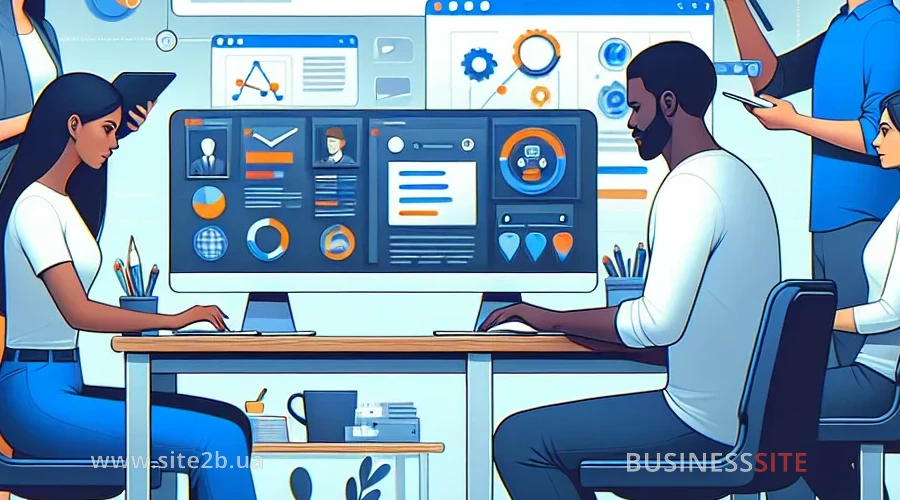
Marketing 360 is a strategy where all advertising, communication, and sales tools work in harmony. This means the customer receives a unified marketing message across all platforms – in social media, contextual advertising, email campaigns, through messengers, and even offline advertising. The key feature of marketing 360 is not just the presence of the brand in different channels, but the adaptation of a unified offer to each channel, considering its characteristics.
Imagine Nike launching a new line of running shoes and using marketing 360 to reach the audience through all possible channels. Example: Nike offers shoes with technology that reduces joint strain, focusing on athletes and people who run.
- Contextual advertising (Google Ads).
- Format: search ads + display advertising in the Display Network.
- The offer is adapted to search queries:
- “Running shoes with cushioning”
- “How to reduce joint stress when running?”
- “Best running shoes 2025”
- Sample ad:
- Headline: New Nike running shoes with cushioning!
- Text: 30% less load on joints. Free shipping. Order now!
- Display ads retarget users who have already shown interest in running shoes on the Nike site or from other sources.
- The offer is adapted to search queries:
- Format: search ads + display advertising in the Display Network.
- Social media advertising (Instagram, Facebook, TikTok, VK).
- Format: video + product carousel + story ads.
- The offer is adapted to social media characteristics:
- On Instagram – videos with ambassadors (well-known runners, fitness bloggers) showing how they test the shoes during a run.
- On TikTok – short challenges: “Test the cushioning – film a slow-motion video of your jump in the new shoes.”
- On Facebook – product carousel: users can scroll and instantly choose a model.
- On VK – targeted ads focusing on running communities.
- Sample creative: Video of a runner jumping in new shoes, followed by the text on the screen: “Nike Air Zoom – 30% less load on joints. Keep running further!”
- The offer is adapted to social media characteristics:
- Format: video + product carousel + story ads.
- Influencer advertising.
- Format: YouTube reviews + posts in Instagram + TikTok Videos.
- The offer is tailored to the blogger’s audience:
- Sports bloggers review sneakers, testing them in various conditions.
- Fitness trainers recommend them as the best sneakers for workouts.
- Lifestyle bloggers create stylish outfits with the new model.
- Example: A YouTube blogger shoots a video: “I ran 10 km in new Nike Air Zoom – what changed?” with heart rate and leg strain measurements.
- The offer is tailored to the blogger’s audience:
- Format: YouTube reviews + posts in Instagram + TikTok Videos.
- Email Marketing and Push Notifications.
- Format: personalized emails + retargeting push notifications.
- The offer is tailored to the client’s behavior:
- If a client was interested in running shoes on the website – they receive an email with a discount offer.
- If a client added an item to the cart but did not purchase – a push notification with a reminder and bonus.
- Example of an email newsletter:
- Email subject: “Ready to run faster? Exclusive discount on new Nike sneakers!”
- Text: Nike A
- The offer is tailored to the client’s behavior:
- Format: personalized emails + retargeting push notifications.
- Offline Advertising (outdoor, stores, events)
Format:- billboards
- in-store advertising
- events
The offer is tailored to the offline environment:- Billboards depicting a runner with the slogan: “Nike Air Zoom – run further!”
- In-store advertising: banners in gyms and Nike stores with the opportunity to test the sneakers on a treadmill.
- Events: Nike organizes a running marathon where every participant can test the new sneakers for free.
Example of a billboard:
Image of a runner in new sneakers, caption: “Nike Air Zoom – your perfect run!”

How 360 Marketing Differs from Traditional Marketing
| Criterion | Traditional Marketing | 360 Marketing |
|---|---|---|
| Promotion Channels | Fragmented (e.g., only social media and website) | All channels are interconnected |
| Connection Between Campaigns | Each campaign operates independently | One strategy adapts to different channels |
| Personalization | Minimal | High (AI, Big Data) |
| Offline + Online | Not always connected | Integration of all channels |
| Company Example | Launched ads on Instagram, but the website and offline advertising are not connected | Advertising runs on Instagram, billboards, email, and bloggers with a unified offer |

How Does 360 Marketing Work?
In the past, marketers launched ads intuitively, but today decisions are data-driven using Big Data, artificial intelligence (AI), and automated algorithms. This allows anticipating client behavior, engaging them at the right moment, and retaining them without unnecessary costs.

Let’s dissect how the key technologies of 360 marketing work
Omnichannel Approach

360 Marketing eliminates this gap: the client sees the brand across different channels, and data on their behavior is shared between them.
Example of a customer journey in 360 Marketing:
- The person searches on Google for “running sneakers.”
- Sees Nike search ads and visits the website.
- 5 minutes later, they are shown ads on Facebook and Instagram featuring the same sneakers.
- They do not buy but subscribe to the newsletter.
- 2 days later, they receive a personalized email with a 10% discount.
- Sees remarketing ads on YouTube with a sneaker review.
- Purchases the product in the online store.
- After the purchase, receives a push notification with a bonus for the next purchase.
Personalization and Big Data

- 91% of consumers prefer brands that recommend products based on their preferences (Accenture data).
- 76% of buyers are willing to share personal data if it leads to a personalized experience (McKinsey).
- E-commerce: online stores analyze searches, clicks, views, and purchases and recommend products likely to interest the customer.
- B2B: services track what materials the client reads and offer relevant solutions via email or retargeting.
- Restaurants and cafes: track order frequency, favorite dishes, and send personalized coupons.
Example of Big Data in 360 Marketing: Netflix:
- What movies and series the user watches.
- At what time they usually watch content.
- What genres they choose.
Data analysis and automation have made advertising work more effectively.
Loves comedies, they will be shown a scene with a funny moment, if dramas—a focus on the characters’ emotions.
How is this applicable in business?
- Companies can use Big Data for:
- Personalizing offers in email newsletters.
- Selecting relevant products in online stores.
- Creating individualized content for clients.
- Accurate audience segmentation in advertising.
Marketing Automation

360 Marketing cannot work manually—there are too many data, channels, and scenarios. Therefore, companies use automated systems that:
- Set up personalized ad campaigns.
- Manage email marketing and push notifications.
- Analyze ad effectiveness and redistribute the budget.
- Determine where in the
the customer is in the funnel stage and is sent a relevant offer.
Key Automation Tools:
- CRM systems – store customer information, record their actions, and help build personalized communications.
- Email marketing systems (Mailchimp, GetResponse) – send automated emails based on customer behavior.
- Advertising platforms (Google Ads, Facebook Ads) – use AI to select the most effective ads for a specific user.
- Chatbots and voice assistants (Chatfuel, ManyChat) – answer customer questions in messengers, select products, and place orders.
Automation Example: Amazon and AI Recommendations
Amazon uses artificial intelligence to:
- Predict purchases – if a customer regularly buys coffee, Amazon will suggest ordering it in advance.
- Recommend products – based on other users’ views and purchases.
- Adjust dynamic pricing – if an item is popular, its price may increase.
How does it work in small business?
- An online store can set up automated email sequences – if a customer views a product but doesn’t purchase it, they’ll receive a reminder email with a discount after 24 hours.
- An Instagram chatbot can consult customers 24/7, relieving managers from overload.
- AI analysis can reallocate the advertising budget – shutting down ineffective campaigns and boosting successful ones.
Without Big Data, 360 marketing is just advertising on all platforms. With Big Data, it’s smart marketing that analyzes customer behavior and adapts to it.
Without automation, 360 marketing requires enormous time and resources. Automation allows for creating personalized scenarios without a marketer’s involvement.
Without AI, advertising remains “blind” – it doesn’t adapt to the user. AI makes it self-adjusting, increasing efficiency.
How to Implement 360 Marketing in a Business?
Launching 360 marketing is not just “adding another promotion channel.” It’s creating a unified ecosystem where all customer touchpoints work synchronously.
Step 1. Determining Customer Touchpoints
Before integrating channels, it’s important to understand where the customer interacts with the brand. It’s crucial to consider not only obvious channels (social media, website) but also to track the customer’s journey from the first touch to purchase.
How to achieve this?
- Use heatmaps of user behavior on the website (Hotjar, Crazy Egg).
- Analyze transitions from social media and ads in Google Analytics 4.
- Monitor which questions are most frequently asked in messengers and calls – this will highlight weaknesses in the funnel.
- Track exit points – where do users leave the site or abandon the cart?
Example: BMW Car Dealerships
- The customer is interested in a new BMW model
- Reads a review on the website
- Sees an ad on YouTube
- Visits a landing page and leaves contact details
- Receives an email invitation for a test drive
- Sees retargeting ads on Facebook
- Schedules a test drive
- Purchases the car
- Receives a reminder after 6 months
personalized service offer.
Each stage is logically connected to the previous one, rather than being a “disjointed element of advertising.”
Step 2. Creating a Unified Strategy Across All Channels

How to make a 360 strategy cohesive?
- Unified positioning and tone of voice:
If a brand communicates informally on Instagram but uses a formal-business style in email, it confuses the client.
- Adapting content to the channel:
The offer remains unified, but the format varies:
On YouTube – an extended video review.
On TikTok – short product demonstrations.
In email – personalized recommendations.
- Cross-channel analytics:
All advertising and organic channels should be tracked in a unified system (Google Analytics 4, HubSpot, Salesforce).
On Instagram – photos with influencers trying the drinks.
On TikTok – a challenge: “Try the new flavor and tell us how it is.”
In email – a personal discount on the first order.
In push notifications – a reminder when approaching a coffee shop.
Step 3. Utilizing Automation Tools

- CRM systems (HubSpot, Salesforce)
- Email automation (Mailchimp, ActiveCampaign)
- Chatbots (Chatfuel, ManyChat)
- Retargeting and AI advertising (Google Ads, Meta Ads)
- Cross-channel analytics systems (Google Analytics 4, Looker Studio)
If a client buys a coffee machine, Amazon automatically suggests capsules and accessories.
If a person viewed a product but didn’t buy it – advertising will follow them on social media and email.
Step 4. Tracking Analytics and Optimizing Advertising

- ROI (Return on Investment) – how much does each advertising campaign bring?
- LTV (Lifetime Value) – how much does a client spend over their entire interaction with the brand?
- Cross-channel analytics – where did the client come from, at what stage did they leave, what influenced them?
Mistakes When Implementing 360 Marketing
- Disjointed campaigns without connection to each other
- Ignoring personalization
- Poor integration of CRM and advertising
- Insufficient testing

Conclusion
Marketing 360 is not just the use of multiple advertising channels, but a unified ecosystem where each tool enhances the other. Companies that implement comprehensive marketing do not lose customers between touchpoints but guide them to purchase with minimal costs.
Why is Marketing 360 essential?
- Customers interact with the brand at dozens of points – if the marketing is fragmented, they leave.
- Big Data tools, AI, and automation not only allow for advertising but also predicting customer behavior.
- Companies that use Marketing 360 achieve higher conversion rates and lower customer acquisition costs.
What is important to remember when implementing Marketing 360?

- Omnichannel approach: advertising, website, social media, email, and offline must work as a single unit.
- Analytics and personalization: Marketing 360 without data is just chaotic campaigns.
- Automation: Manual management of such marketing is impossible; CRM, AI, and AI-advertising are needed.
Avoid mistakes: not connecting channels, ignoring analytics, and personalization means wasting budget.
Brands that use Marketing 360 not only sell more but also create strong connections with customers, forming long-term relationships.
Marketing 360 is not a trend, but the new standard of marketing!
Rate the article:





