
In 2024, SEO promotion remains one of the most effective tools for business advertising.

If your website does not rank at the top of search engine results, you are losing potential clients every day. SEO not only helps businesses attract customers but also serves as a long-term investment that brings more traffic and sales each month.
You will receive proven advice on improving your website’s visibility online. Keep reading to discover how to harness the power of organic search traffic to grow your business.
How search engines work
Search engines like Google use complex algorithms to find and rank websites.
I will try to explain their essence with a simple example:

Crawling — how the search engine finds pages
Search engines, such as Google, use complex algorithms to find and rank websites.
The first stage is crawling. Search engine bots (or spiders) scan the entire web, just like a librarian scans new books. The bots “read” the website pages, determine their content, and save links to these pages for further processing. It is essential that your website is accessible for crawling; without this, the search engine won’t be able to discover your website.
Indexing — how the system “remembers” the pages
The next step is indexing. Just like a librarian records book information in catalogs, the search engine stores data about all the crawled pages in its database. At this stage, it is crucial that your site pages contain valuable content. The more pages you have, the higher the chances that the search engine will find useful information for its users. For example, if your site is an extensive encyclopedia with a lot of content, your chances of ranking high increase.
Ranking — choosing the best pages
Now, imagine a visitor asks the librarian for a book recommendation on business. How does the librarian choose what to suggest? Probably a book with many pages (i.e., more informative websites), good illustrations (visual content, multimedia), and a neat, well-bound cover (website design and technical optimization). This is how a search engine works: it evaluates pages based on several factors to offer users the best results.
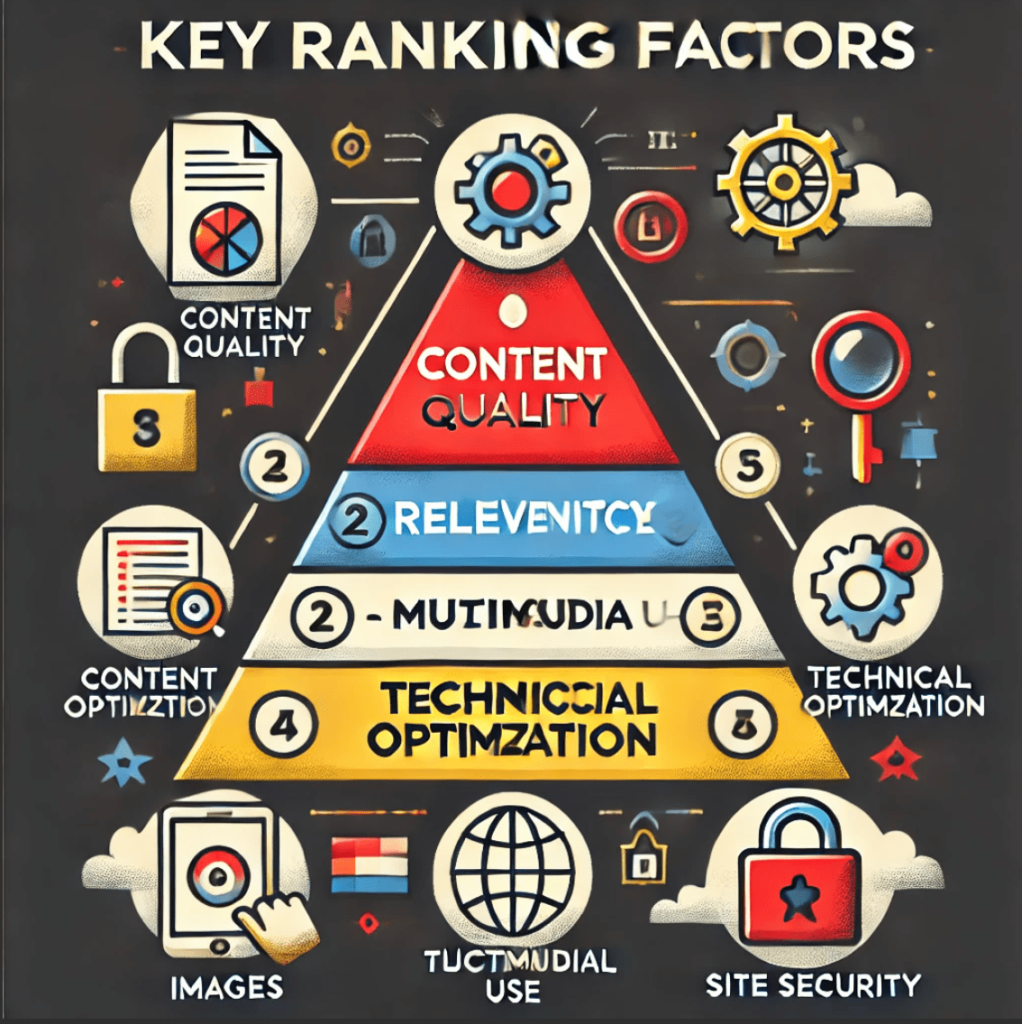
Key ranking factors:
- Content quality: The more useful and relevant the content on your website, the higher it will be rated by search engines. This is like a librarian choosing a book with detailed and interesting content.
- Relevance to the query: Like a librarian, Google selects content that most accurately answers the user’s query. Using keywords in the text, headings, and meta descriptions helps the search engine understand what your site is about.
- Number of pages and content: The more useful pages a website has, the higher the likelihood that they will be indexed and ranked. A librarian is more likely to recommend a book that covers all aspects of a topic.
- Multimedia and graphics: Websites with high-quality images, infographics, and videos attract more attention. This is like a beautiful book with bright illustrations — readers will prefer to pick it up.
- Technical optimization and design: A user-friendly interface, fast loading, and mobile adaptation are crucial criteria. Imagine a librarian would not recommend a tattered, poorly scanned book, even if it contained useful information.
- External links: It makes sense that if a book is referenced in other books and recommended, you, as a librarian, would consider that when recommending it to a visitor. Likewise, search engines consider external links from other websites to yours, so maintaining a healthy backlink profile is important.
- Website security. Search engines care about user safety just as a librarian ensures books are not harmful.
For SEO success, it’s crucial to ensure your site:- Uses secure connections (HTTPS).
- Is safe for users, free of viruses or malware.
- Does not spread unverified or dangerous information.
Search queries — selecting keywords
Selecting keywords is where the SEO strategy begins, as keywords are directly linked to what your potential customers are searching for. When your website appears for relevant queries, it increases its visibility and drives targeted traffic.
- Head terms: These are short and frequently used phrases like “TV” or “sneakers.” They generate high traffic volume but have high competition and low targeting. Such queries do not always lead to sales, as users are just beginning their search at this stage.
- Navigational queries: These are queries related to searching for a specific brand or website, such as “Nike official website” or “Apple Store.” Ranking for such queries is important for brand recognition, especially if you have a well-known trademark.
- Informational queries: Users input these queries when searching for specific information, such as “how to choose a laptop” or “pizza recipe.” Ranking for such queries helps attract an interested audience, though such users may be in the early stages of making a purchase decision.
- Location-based queries: These queries are tied to a specific location, such as “hair salon in New York” or “cafe near me.” These often lead to quick actions, as users are looking for services in their area.
- Media-related queries: These queries are associated with content, such as “best movies of 2024” or “music videos.” Their purpose is to attract attention to content, which can be useful for media outlets or entertainment platforms.
- Transactional queries: These queries lead directly to purchases, such as “buy a smartphone online” or “order pizza delivery.” These are the most valuable for businesses, as users are ready to make a purchase.
Keyword research tools
There are many tools available for researching and analyzing keywords.
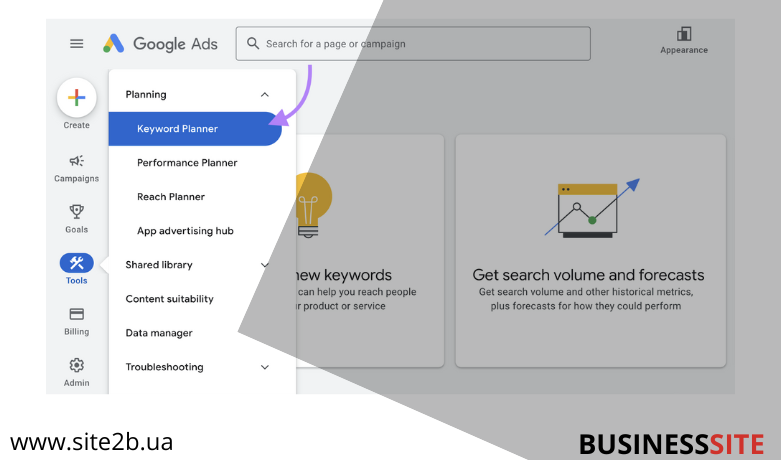
- On our projects, the BUSINESS SITE team most often uses Google Keyword Planner — a free tool that provides data on which queries are most frequently entered by users in Google. It also shows how competitive each query is and the traffic volume you can expect. This helps assess whether it is worth ranking for a particular query.
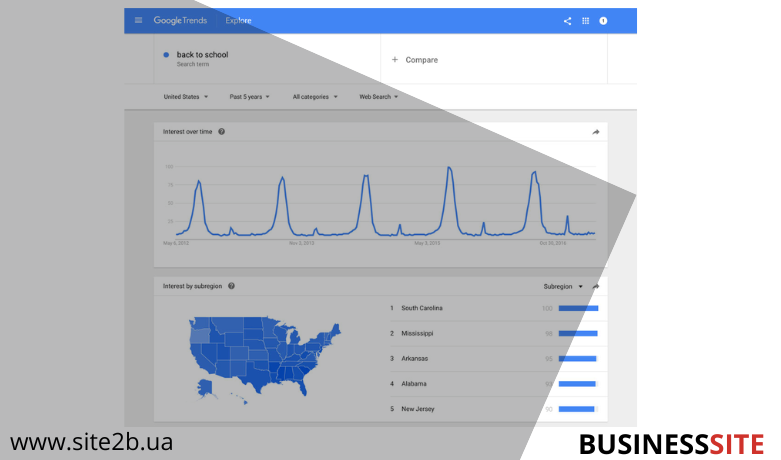
- Google Trends is another useful tool that shows changes in keyword popularity over time. It is especially helpful for tracking seasonal trends and understanding how queries change depending on the time of year or global events. For example, some queries may peak during holiday seasons, and you can use this in your marketing strategy.
- Ahrefs and Semrush — these are paid tools that allow for deeper analysis of keywords, competition, traffic volume, and finding long-tail keywords that bring targeted traffic with less competition.
On-page SEO and creating quality content for SEO
Once keywords have been selected and the strategy is set, the next step is to create quality content. The content should not only contain the right keywords but also be engaging, useful, and well-structured for both users and search engines.  In this chapter, we’ll discuss how to write texts correctly, use keywords, apply markup and multimedia, and optimize meta tags for SEO.
Writing SEO text
Writing SEO text is based on the following principles:
- Keyword density. This is an important factor but can be easily overused. In the past, SEO specialists heavily relied on “stuffing” texts with keywords, but modern search engines, especially Google, may interpret this as spam. The optimal density is about 1-2% of the total text volume. In other words, for every 1,000 words of text, the keyword should appear 10-20 times, naturally integrated into the content.
- LSI (Latent Semantic Indexing). Along with the main keywords, it’s important to use LSI phrases — words and expressions semantically related to the main search queries. For example, if you’re writing about “buying a laptop,” LSI words might be “performance,” “RAM,” and “processor power.” This helps search engines better understand the context and topic of your text.
- E-E-A-T principle. Your content should meet the requirements of Experience, Expertise, Authoritativeness, and Trustworthiness. This means that your articles should demonstrate professionalism and meet high standards. For example, if your site sells medical products, articles should be written by professionals with experience in the medical field, contain reliable information, and include references to authoritative sources.
Page markup
Once the text is written, it is important to structure it properly for easy reading and indexing by search engines.
- Headings (H1, H2, H3). Headings help organize the text and break it down into logical sections. The main heading of the page (H1) should contain the primary keyword and clearly describe the content of the page. Subheadings (H2 and below) divide the text into sections and make it easier for users to digest the information. It’s important to use keywords and LSI phrases in subheadings to improve SEO.
- Numbered and bulleted lists. Lists make the text more “scannable” and help improve its readability. Users prefer to quickly find answers to their questions, and lists make this easier. Moreover, well-structured lists often appear in featured snippets — highlighted answers in Google search results.
- Block layout. Use block structures to create logically separated parts of the text. For example, highlight important tips, steps, or recommendations in separate blocks. This not only enhances the user’s perception of the content but also makes the page visually more appealing.

Using multimedia
Interactive content is a powerful tool that improves text engagement and increases the time users spend on the site.
- Images. Visual content grabs attention and helps users better understand the material. Use high-quality images relevant to the article’s topic. Don’t forget to optimize images: reduce their size to speed up page loading and add alt tags with descriptions and keywords. This helps both users and search engines.
- Videos. Video content helps increase user engagement and improve behavioral factors. For example, if you run a construction blog, short how-to videos can help users understand how to perform specific tasks. Make sure videos are optimized for fast playback on mobile devices.
- Infographics. This tool visually presents complex information in a more digestible way. Infographics are often used to illustrate data, research, or instructions. They make content more engaging for users and have high potential for earning backlinks.
Meta tags: improving page visibility
After the content is created and optimized, don’t forget about meta tags, which also play an important role in SEO.
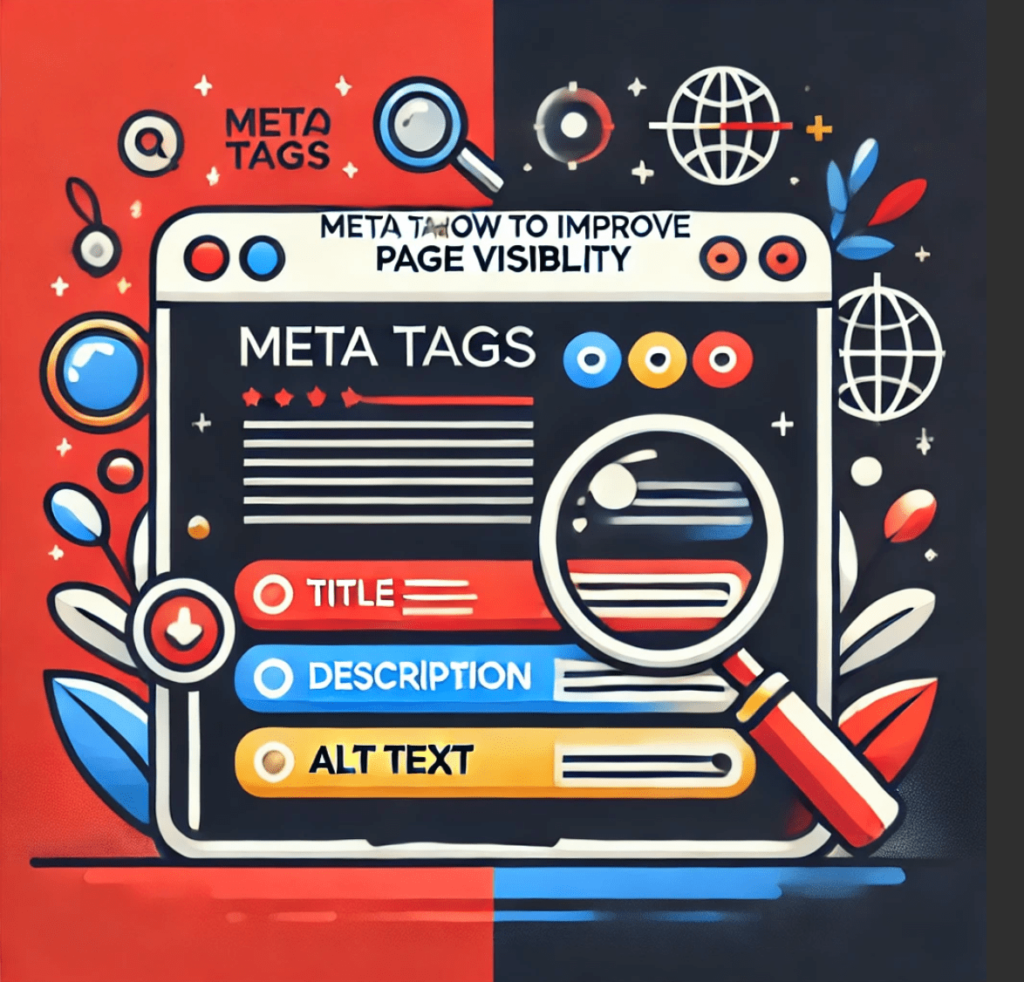
- Title (page title). This is one of the most important SEO factors. The page title should be short (50-60 characters), include the main keyword, and grab users’ attention. A good title increases CTR (click-through rate), which affects the page’s ranking in search.
- Meta description. Although meta descriptions don’t directly affect rankings, they help increase CTR. A meta description is a brief preview of the page that users see in the search results. It’s important that it is concise (about 150-160 characters), includes a keyword, and encourages users to click.
- Alt tags for images. These tags describe the content of images for search engines and people with disabilities. Add alt tags with keywords to every image to improve SEO and make the site more accessible.
Technical optimization of the website
In the same way, search engines will prioritize recommending sites that meet technical requirements.
Page load speed
Page load speed is a critical factor for both users and search engines. Studies show that 53% of users leave a site if it takes more than 3 seconds to load. 
How to speed up your website:
- Optimize images. Ensure that images don’t take up too much space. Use image compression tools without losing quality (e.g., TinyPNG or ImageOptim) and switch to modern formats like WebP.
- Minify CSS, JavaScript, and HTML. Remove unnecessary spaces and comments in the code to reduce its size. This speeds up page loading, especially on mobile devices.
- Caching. Set up caching on the server and in browsers to allow pages to load faster on repeat visits.
- Use CDN (Content Delivery Network). CDN distributes your website’s content across servers worldwide, ensuring fast access from any region.
Mobile adaptation (Mobile First)
As smartphone usage increases, mobile adaptation has become a key factor for SEO. In 2024, more than half of all internet visitors access websites via mobile devices, and search engines like Google take this into account by promoting mobile-optimized sites. 
The Mobile First principle means that a website is first developed and optimized for mobile devices, then adapted for computers.
Key requirements for mobile optimization:
- Responsive design. Website pages should display correctly on all screen sizes. Use responsive grids and flexible images to ensure content scales automatically.
- Ease of navigation. Menus, buttons, and links should be easy to use on touch screens. Avoid small text and buttons that are hard to press.
- Page load speed on mobile devices. Ensure the site loads quickly, even on devices with slow internet connections.
Human-readable URLs
Bad: www.site.com/page?id=12345
Good: www.site.com/category/seo-tips
Tips for setting up human-readable URLs:
- URLs should be short but informative.
- Use hyphens to separate words, not underscores.
- Avoid using special characters and dynamic parameters in URLs.
- All URLs should be lowercase.
XML Sitemap and Robots.txt

An XML sitemap is a file that contains a list of all the pages on your website that are available for indexing. It helps search engines understand your site structure and ensures that all your pages are accessible for crawling. An XML sitemap is especially important for large websites with many pages, as well as new websites that are just starting to gain an audience.
How to set up an XML sitemap:
- Generate a sitemap using plugins (for example, for WordPress, you can use Yoast SEO) or online services (Screaming Frog, XML-sitemaps.com).
- Submit your sitemap to Google Search Console and Bing Webmaster Tools so search engines can regularly check for updates to your site.
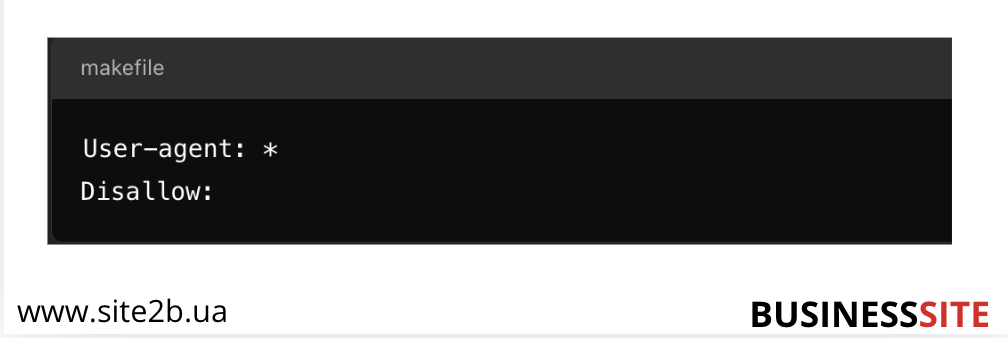
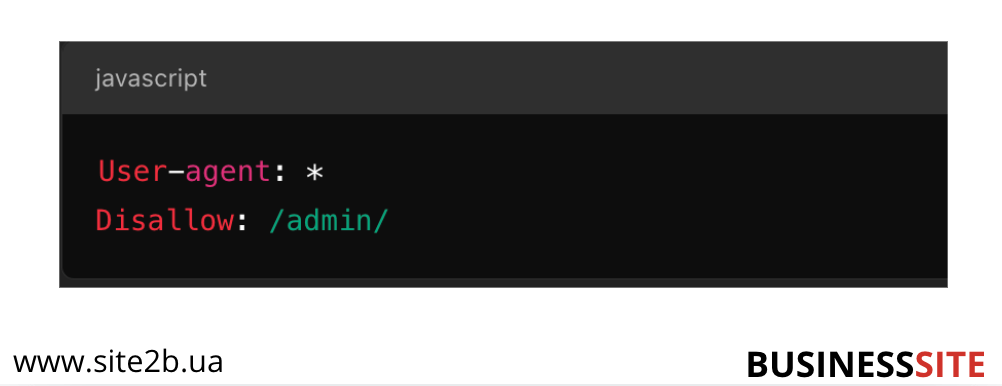
Robots.txt is a file that tells search engine bots which pages or files they can and cannot crawl. This is especially useful if your site contains pages you don’t want to show in search results (e.g., shopping cart or user account pages).
Example Robots.txt settings:
Allow crawling of the entire site:
Disallow access to admin pages:
SSL certificates and HTTPS connection
Search engines, especially Google, place great emphasis on website security. If your website does not use an SSL certificate (HTTPS), it will be marked as unsafe, which not only scares away users but also negatively affects your ranking. 
Schema markup
Structured data is additional information that helps search engines better understand the content of your website. Using special markup (schema.org), you can indicate which elements on the page are products, reviews, recipes, etc. 
Examples of structured data usage:
- For an online store, you can use product markup so that the search engine can display the price, stock availability, and reviews directly in the search results.
- For local businesses (e.g., restaurants or salons), you can add markup for address, phone number, and business hours, which will make your site more visible in Google Maps and local results.
Link Building: creating a backlink profile
Search engines view backlinks as “votes of trust.” The more authoritative websites link to your resource, the higher your website will rank in search results. Although with each passing year, search engines place less emphasis on external links.

Quality backlinks:
- Boost trust and authority.
- Increase organic and referral traffic.
Link building methods:
- Creating valuable content. High-quality content naturally attracts links. Useful articles, research, guides, and infographics are often cited by other websites.
- Guest posting. Publishing articles on relevant websites with a link back to your site helps you gain backlinks from relevant websites and expand your reach.
- Collaborating with bloggers and influencers. Reviews, mentions, and recommendations from influencers attract both an audience and backlinks.
- Broken link building. Find broken links on other websites and offer to replace them with your relevant content.
- Press releases and media publications. Interesting materials can attract the attention of journalists and publications, leading to natural links from authoritative sites.
Link building mistakes:
- Automatically buying links. Purchased links from resources that haven’t been manually vetted, with poorly composed anchor texts, can result in penalties from Google.
- Overusing anchor texts with keywords. Aim for natural and diverse anchor texts to avoid suspicion of SEO manipulation.
SEO analysis and strategy adjustments
SEO analysis is an ongoing process that allows you to assess the effectiveness of your strategy and make changes to achieve better results. 
SEO analysis helps you:
- Evaluate the current effectiveness of your website promotion.
- Identify weaknesses and areas for improvement.
- Optimize content and technical aspects of the site based on user behavior and indexing data.
- Adjust the strategy depending on changes in search engine algorithms and competitors’ actions.
Regularly check your results and adjust your SEO strategy, optimizing key pages, improving the mobile version, and working on the quality of backlinks.

Google Analytics 4 (GA4) helps you analyze user behavior:
- On-site behavior: track which pages are visited most often and where users spend the most time.
- Conversion analysis: evaluate how effectively pages drive target actions.
- Traffic sources: understand where users come from and which channels yield the best results.
Google Search Console (GSC):
- Ranking analysis: GSC shows which queries your site appears for in search results, average positions, and CTR.
- Indexing errors: quickly find and fix indexing issues.
- Backlink analysis: monitor which websites link to your resource and evaluate the quality of those links.
Practical steps for adjusting your strategy:
- Evaluate key queries:
Use GSC to check for queries with low positions. Optimize relevant pages: improve the content, add keywords, and enhance the structure. - Optimize pages with low engagement:
Using GA4, find pages with high bounce rates and low time on site. Improve their usability: make the content more structured and speed up page loading. - Work on the mobile version:
GSC will reveal problems with mobile adaptation. Optimize the design and speed for mobile devices if they lead to low engagement. - Monitor your backlink profile:
Check the quality of backlinks through GSC. Remove or disavow harmful links using the Disavow Tool.
Conclusion
SEO is a powerful tool for attracting customers via the internet. By following the core optimization principles outlined in this guide, you can significantly improve your site’s visibility and attract more targeted traffic. However, SEO is a process that requires time and continuous improvements.
Don’t delay; start working on promoting your business today!
Rate the article:





