
Today, communication automation is not just a competitive advantage but a necessity for any business that wants to grow and interact effectively with customers. Over the past few years at BUSINESS SITE, we’ve observed how a Whatsapp chatbot is changing the approach to customer service and sales in companies across various industries—from pharmaceuticals and banks to e-commerce and tourism.
The advantages of communication automation are obvious: saving employees’ time, reducing support costs, increasing conversion and service quality. Over the years, we’ve ensured that a properly implemented Whatsapp chatbot can not only relieve managers but also significantly improve the customer experience by providing 24/7 support, instant replies, and personalized offers. This is especially relevant for Ukrainian companies, where competition for clients requires maximum efficiency at each communication stage.
What is a Whatsapp Chatbot?
One of the key benefits of a Whatsapp chatbot is 24/7 support. Clients can get answers to their questions or place orders at any time, without waiting for business hours or an available operator. This is especially crucial for e-commerce, banking, and tourism companies, where speed of response directly affects sales and loyalty.
The benefits of chatbots for business extend far beyond automating answers. Implementing a chatbot allows internal processes to be optimized, reduce staff workload, and improve request handling efficiency. For example, for online stores, we at BUSINESS SITE implement chatbots that automatically inform clients about order status, integrate with delivery systems like “Nova Poshta,” and send notifications about stock arrivals.
Moreover, a Whatsapp chatbot dramatically increases the level of personalized communication. Using data from CRM, the bot can address the client by name, offer individual discounts, or remind them of repeat purchases. This approach not only improves the user experience (UX) but also increases average transaction amounts and the frequency of repeat engagements.
How to Implement a Whatsapp Chatbot in Business?
Planning and Setting Goals. It’s vital at this stage to understand the tasks the chatbot should resolve: automating support, lead generation, increasing sales, or gathering feedback. We always recommend our clients start with analyzing existing communication processes and identifying growth points.
Prototyping and Testing. Once the goals are agreed upon, a chatbot prototype is developed and tested with a limited audience. This helps to identify weaknesses, adjust scenarios, and ensure the bot indeed solves the assigned tasks.
Integration of the Chatbot with Business Systems

The effectiveness of a Whatsapp chatbot largely depends on its integration with the company’s internal systems. Integrating the chatbot into CRM allows automatic recording of customer requests, communication history tracking, and analytics formulation for each client. For instance, for the pharmaceutical company “Yuria-Pharm,” we implemented a CRM-integrated chatbot, accelerating application processing and improving support quality.
Integration with e-commerce platforms (Prom.ua, Rozetka, own online stores) opens new possibilities for automating sales through Whatsapp. The bot can automatically pull information about products, stock availability, delivery status, and initiate repeat and cross-sales.
Setting Up and Using a Whatsapp Chatbot
How to Set Up Automatic Replies in Whatsapp
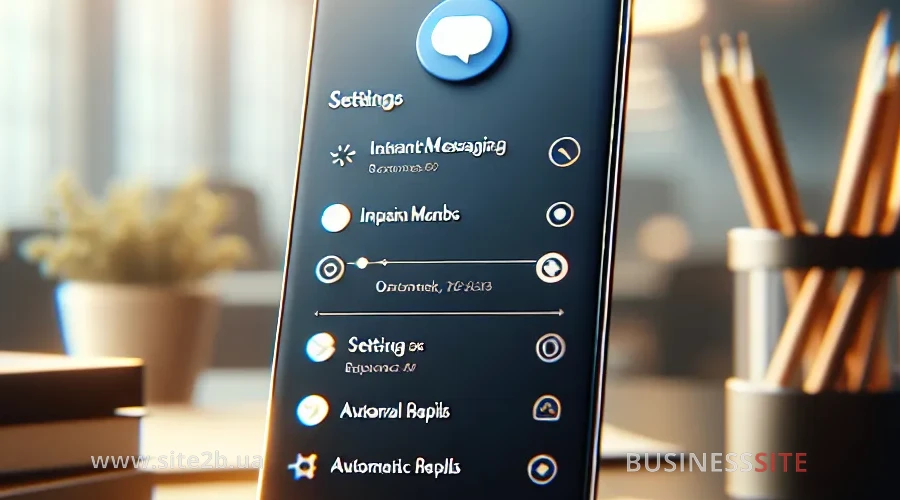
Setting up a Whatsapp chatbot begins with connecting to the WhatsApp Business API. For this, either approach an official business partner (Business Solution Provider) or register independently on Meta’s platform and undergo verification. At BUSINESS SITE, we recommend working through partners, as this speeds up access acquisition and ensures support at all stages of implementation.
Following API connection, the chatbot programming phase begins. Modern solutions use NLP (Natural Language Processing) technologies, enabling the bot to understand natural language, process complex requests, and provide relevant responses. In one of the projects for “OKSI Bank,” we implemented a chatbot that not only answers standard questions but also helps clients select the necessary banking product by analyzing their needs.
Tools and Platforms for Chatbot Development

There are many platforms available for developing Whatsapp chatbots—from specialized SaaS solutions to custom scripts on Python or Node.js. Among the most popular tools are Twilio, BotsCrew, ManyChat, Chatfuel, and bespoke solutions based on WhatsApp Business API. At BUSINESS SITE, we select a platform based on client tasks, scalability, and integration needs with external services.
For complex scenarios, we use custom development with AI and machine learning, enabling the implementation of intelligent business chatbots with personalization, data analysis, and complex process automation support.
Advantages and Challenges of Chatbot Implementation

A Whatsapp chatbot for business is not just about automating support but a powerful tool for increasing sales. Based on our experience, implementing a chatbot can boost conversion by 20-30% due to instant requests, personalized offers, and repeat sales automation. Additionally, chatbots collect analytics on each request, allowing marketing campaigns to be promptly adjusted and client service improved.
Challenges and Mistakes in Chatbot Implementation
To avoid these issues, we always recommend starting with an MVP (minimum viable product) and gradually scaling the functionality. Special attention should be paid to security and data protection issues. A Whatsapp chatbot processes clients’ personal data, making it crucial to use secure communication channels, store data on reliable servers, and comply with data protection laws.
Whatsapp Chatbot — Cost and ROI of Implementation

What Budget is Needed for Chatbot Development?
Additionally, costs for using the WhatsApp Business API are considered, which depend on the number of messages and the country (for instance, in 2025, Meta transitions to a payment model per message or session).
How to Measure Chatbot Effectiveness?
To assess chatbot effectiveness, we at BUSINESS SITE use key metrics: the number of requests processed, average response time, client satisfaction level, conversion growth, and reduced employee workload.
Examples of Successful Whatsapp Chatbot Usage
In recent years, we’ve realized dozens of projects for implementing Whatsapp chatbots for companies across different industries. For example, for the laboratory “Khemoteka”, the chatbot automated appointment scheduling for tests and information on result readiness, reducing call center workload by 40%. In the online store “Akon”, the bot handled order processing, integration with “Nova Poshta”, and sending delivery notifications, increasing order processing speed and customer satisfaction levels.
For the travel agency “AnyTour”, we implemented a Whatsapp chatbot that automatically selects tours based on specified parameters, sends selections, and answers questions 24/7. This allowed the agency to increase application submissions by 25% and reduce request processing time threefold.
How Chatbots Improve Customer Service
The tangible results of implementing a Whatsapp chatbot are always measurable: NPS growth, reduced response time, increased repeat purchases. For example, in one project for the construction company “Novdim”, the chatbot automated the intake of consultation requests and informed clients about construction progress, significantly enhancing communication transparency and client trust.
Conclusion

Implementing a Whatsapp chatbot in business is not just a fashionable trend but a strategic step towards optimizing processes, increasing sales, and enhancing customer loyalty. Through years of work at BUSINESS SITE, we’ve ensured that the success of implementation relies on correct goal-setting, quality integration with business systems, and constant results analysis.
Rate the article:





