
82% of online stores in Ukraine lose up to a third of potential profits due to errors and delays in manual order processing, inaccurate inventory management, and inefficient communication with customers. In a situation where the average check of an online shopper has increased by 17% over the past two years and competition in the e-commerce market is intensifying due to digital transformation and the development of marketplaces, such losses become critical for businesses.
Automating an online store is not just a trendy trend; it’s a strategic tool that allows reducing costs, ensuring transparency, control, and predictability of results. From my experience, it is precisely the automation of e-commerce business processes that gives entrepreneurs and marketers in Ukraine a competitive edge, measurable sales growth, and the ability to manage business on a new level.
Problems of Online Stores Without Automation

Problems of online stores without automation appear at the early stages of business growth: manual labor begins to take more and more time and effort, and errors in processes lead to customer losses and a decline in service quality. Let’s consider what specific errors and losses manual processes in an online store can lead to.
Errors and Losses in Manual Processes of an Online Store

Manual assortment management leads to goods with expired shelf life or out-of-stock items still being displayed on the site. This not only reduces conversion but also increases returns and complaints. Automation of order processing eliminates these problems through integration with WMS and automatic inventory control.
How the Human Factor Affects E-commerce
The human factor manifests not only in errors but also in limitations on information processing speed. When staff are overwhelmed with routine tasks—from invoice formation to manual discount approvals—they don’t have time to focus on business development and improving customer experience. In a project for a major electronics online store, we saw that up to 22% of managers’ working time was spent on manual returns processing and price negotiations with suppliers.
The automation of e-commerce business processes minimizes the impact of human factors: reduces the risk of theft, fraud, and errors in document flow. As a result, the owner gets a transparent view of what’s happening, and the team frees up time for strategic tasks.
Automation of Business Processes in E-commerce

Business process automation in e-commerce covers an increasing range of tasks: from order processing to customer support and warehouse management. By implementing automation, online stores speed up routine operations, minimize errors, and improve service quality, which is crucial for cost reduction and sustainable growth. Let’s explore how specific solutions help online stores optimize resources and increase efficiency.
Automating an Online Store: How to Reduce Costs
Automating an online store is not just about cutting staff costs. It’s an opportunity to ensure high inventory accuracy, avoid overstocking and losses linked to the human factor. According to McKinsey, automation of order processing reduces operational costs by 25–40%. In a case for a home goods online store, BUSINESS SITE specialists implemented automation of inventory control, reducing order assembly errors fourfold and decreasing return costs.
Automation tools for online trading allow data integration from various sources, which is critical for multi-channel business. E-commerce business process automation ensures fast data updates on prices, inventory levels, and order statuses—without delays or failures.
How to Increase Business Transparency and Security
Automation allows online store owners to see all key metrics in real time: from the number of processed orders to inventory levels and ad campaign effectiveness. Solutions we developed at BUSINESS SITE for e-commerce clients included automation of KPI monitoring for online stores and cross analytics, ensuring transparency and control at each stage.
Document flow automation and integration with cloud services (e.g., EDMS, electronic reporting) minimize fraud risks and errors in handling financial and legal documents. This is especially relevant for online stores working with a large number of suppliers and customers.
Automation and Customer Experience: Impact on Loyalty
The speed and accuracy of order processing directly affect customer satisfaction and repeat purchases. Automation of loyalty programs, personalized offers, automated email campaigns, and chatbots for customer support are all tools BUSINESS SITE deploys to increase LTV and retain customers.
Practice shows: automating customer interactions reduces waiting times for responses, decreases communication errors, and increases conversion for repeat purchases. In a case for e-commerce in the fashion segment, automating store newsletters increased the open rate by 38%, and repeat orders rose by 21%.
Which Online Store Processes Should Be Automated?
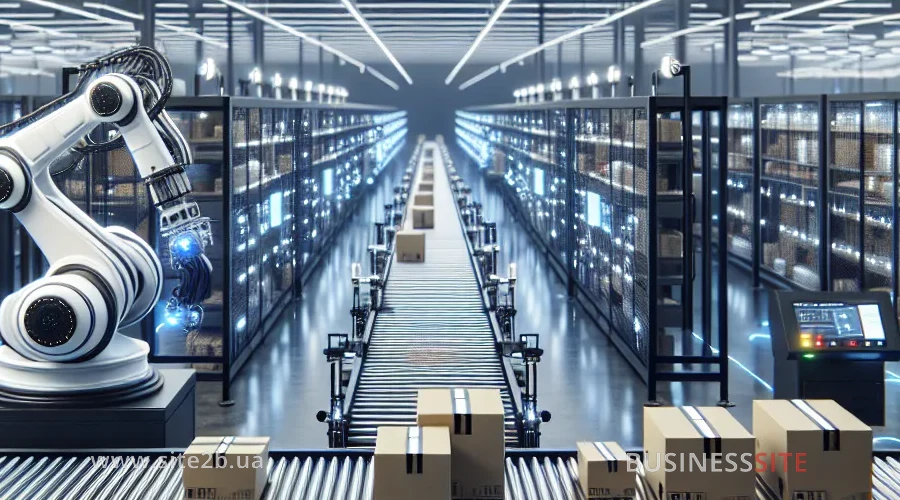
Automating key processes in an online store significantly reduces costs, speeds up order processing, and improves customer service quality. To understand which processes should be automated for maximum efficiency, let’s explore the main areas—from the warehouse to customer interaction.
Warehouse Automation for Online Stores
Assortment management automation includes updating product cards, automatic supplier price list uploads, integration with marketplaces (e.g., Prom.ua, Rozetka), and competitor price monitoring.
Order and Logistics Automation
Order processing automation, a key to increasing an online store’s throughput without staff expansion. Automation systems generate documents, notify customers, integrate with delivery services (“Nova Poshta”, Meest), provide package tracking and automatic order status notifications.
Document flow automation (EDMS) allows quick invoice, act, and waybill generation and digital exchange with customers and suppliers, speeding up transaction cycles and reducing error risks.
Marketing Automation for E-commerce
Automating customer data collection and analysis allows creating personalized offers, managing loyalty programs, and increasing LTV.
How to Implement Financial Accounting Automation?
Cloud services for online stores (e.g., integration with “PrivatBank”, “Monobank”) allow financial accounting automation, report generation for management, cash flow control, and timely budget deviation detection.
ERP system integration provides a unified base for managing purchases, sales, finances, and staff.
Integration with Price Lists Automation
Automating supplier price list uploads and assortment updates enables online stores to quickly respond to market changes, maintain current prices, and minimize errors when handling many SKUs. In one BUSINESS SITE case, automating supplier integration reduced assortment update time from 2 days to 30 minutes.
Stages of Online Store Automation

Stages of online store automation allow for the sequential optimization of work processes and more effective management. Each stage requires thorough preparation: primarily, it’s crucial to focus on data collection and structure, as these will serve as the foundation for future automated solutions.
Now let’s look at how to properly organize this process for further automation.
Data Collection and Structure for Automation
How to Implement Automation Tools?
BUSINESS SITE practice confirms: attempting to automate all processes simultaneously leads to chaos and loss of control. It is much more effective to implement automation gradually: starting with the most resource-intensive and critical processes (order processing, warehouse, finance), progressively expanding coverage. This approach allows for quick initial results, risk minimization, and strategy adjustment based on factual data.
Integrating Automation into IT Systems
Modern online trading automation tools support API integration with CMS, CRM, ERP, delivery services, and payment systems. From my experience, quality integration ensures end-to-end data exchange, information synchronization, and security. In a project for e-commerce in the construction materials segment, we implemented integration with several suppliers and logistics services, reducing order processing time by 35%.
Automation Efficiency and ROI
Tools for Online Trade Automation

Online trade automation tools simplify and speed up digital business management through specialized platforms and solutions. Systems like CMS and PIM are crucial here, providing centralized storage, processing, and publication of product information across all platforms and automating key online trading processes.
CMS and PIM: What They Are and Why They Are Needed
CRM for Customer Relationship Automation
Integrating CRM for online stores (AmoCRM, HubSpot, Salesforce) provides communication automation, purchase history tracking, sales funnel and loyalty program launches. Chatbot work automation allows for 24/7 request processing, boosting conversion and reducing manager workload.
WMS for Online Store Warehouse Automation
WMS systems (Logist Pro, InStock, SAP EWM) automate inventory control processes, assembly, stock level control, returns, and complaints. In a case for an electronics online store, warehouse automation reduced order assembly time by 42% and decreased assembly errors.
Marketing and Sales Automation Systems
Tools for automating online store mailings (SendPulse, eSputnik), sales funnels, chatbots, A/B testing automation services (Google Optimize, Optimizely) allow for personalized communications, hypothesis testing, and increase ad campaign ROI.
Financial Analytical Tools
Errors in Online Store Automation

Errors in online store automation can not only increase expenses but also disrupt business processes and lead to customer loss. Understanding typical automation errors in e-commerce helps avoid common pitfalls and build a truly effective system.
Typical Automation Errors in E-commerce
In my experience, the most common mistakes are attempting to automate all processes at once, lacking a clear strategy, weak system integration, and insufficient staff training. As a result, automation becomes a set of disparate tools that don’t provide a synergistic effect.
Data Security: How to Reduce Risks
How to Scale Process Automation
Automation is not a one-time action but a continuous development process. Regular tool updates, staff training, quality control, and adaptation to new market demands are essential conditions for scaling an online store without losing service quality.
Why Automate an Online Store?

By automating an online store, entrepreneurs gain not only time and resource savings but also the ability to quickly react to market changes, manage assortment, finances, and customer experience. In the context of digital transformation in e-commerce and increasing competition, automation becomes a key success factor and sustainable business development.
Rate the article:





