
The impact of the author page on SEO and user trust
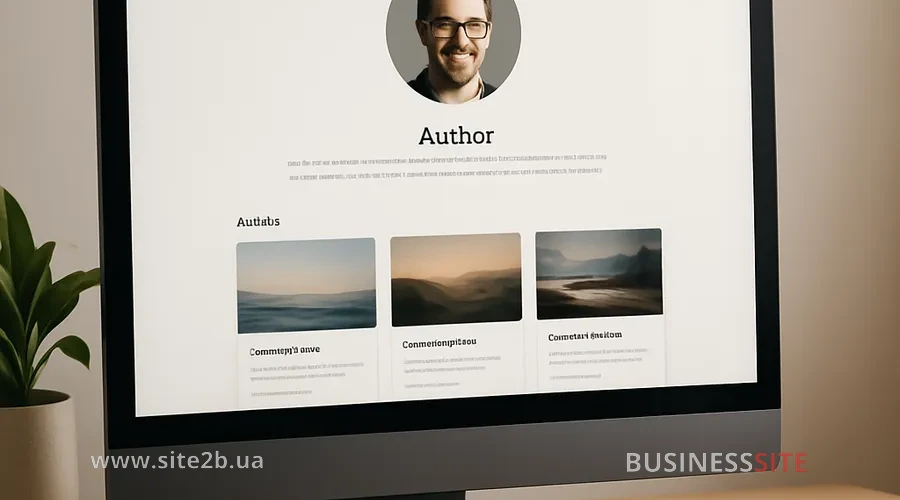
The impact of the author page on SEO and user trust is a crucial aspect for improving a website’s reputation and authority. An author page helps strengthen users’ trust in the content by demonstrating the author’s expertise and qualifications. This, in turn, can positively affect SEO, as Google and other search engines give greater weight to content created by experts in specific fields, especially in YMYL (Your Money or Your Life) topics.
User trust in SEO: why it matters
In my observations, user trust is not an abstraction but a measurable value that directly affects the effectiveness of organic traffic and conversion. When we launched projects for e-commerce and the banking sector, we always noticed that having a detailed author page increases time on site and pages per session. A user who sees who is behind the content is less likely to go to competitors and more often completes target actions.
An author page designed with UX and SEO in mind improves these metrics, which indirectly affects ranking. At BUSINESS SITE we recommend integrating elements that enhance trust: links to social networks, verified achievements, real testimonials.
The impact of an author’s expertise on content perception
An author’s expertise is not only degrees but also demonstrating real experience. In one case for a pharmaceutical company we added to the author page a section with publications in industry media and certificates.
This approach strengthens the perception of the site as a source of expert information for both users and search engines.
The role of the author page in E-E-A-T and YMYL

The role of the author page in E-E-A-T and YMYL is becoming increasingly significant because it helps confirm the experience, expertise and authoritativeness of content, especially in areas critical to the safety and well-being of users. Understanding how to properly build an author page allows you to improve the way search engines perceive the site and increase trust in the published information. Next, we will consider what the E-E-A-T concept is and why it is important for SEO.
E-E-A-T in SEO: what it is and why it matters?
This is especially critical for YMYL topics (Your Money or Your Life) — finance, medicine, safety — where a mistake can cost the user dearly.
The importance of the author page for E-E-A-T
The author page is the main tool for demonstrating E-E-A-T. From BUSINESS SITE’s experience, the clearer and more structured the expert’s profile, the higher the level of trust from the audience and search engines. We always include in the profile:
- Detailed BIO with a focus on relevant experience and achievements.
- Links to publications, interviews, professional certificates.
- Integration with external platforms (LinkedIn, industry portals).
This not only builds trust but also helps Google associate the author with an expert entity in the knowledge graph.
YMYL specifics and the role of the author page
In projects for pharmaceuticals and finance we encountered that Google imposes increased requirements for authorship. In such niches, it is important not just to indicate a name but to confirm qualifications, experience and transparency of communication. Implementing structured data and detailed author profiles is a mandatory condition for ranking growth and passing manual quality reviews.
How Google evaluates authorship: patents and data

How Google evaluates authorship, relying on patents and data, is a complex process in which the company uses its own research and technologies to determine the significance and originality of content. In this context, Google’s patents provide important technical and legal grounds that help understand how authorship is taken into account in the company’s algorithms and systems.
Google patents on the importance of authorship
Google has long invested in author identification technologies. For example, patent US9378293B2 describes a method for assessing content quality based on authorship. The Agent Rank concept and the development of algorithms like Generating Author Vectors allow Google to analyze connections between an author, their publications and the level of trust in them.
In BUSINESS SITE practice we take these principles into account, implementing structured data and linking the author
and with its content via microdata.
Google Knowledge Graph for author identification
The Google Knowledge Graph (Knowledge Graph) is built on entities — including Person profiles. The more data about your author is aggregated in the Knowledge Graph, the higher the likelihood that Google will perceive them as an expert.
Google: matching authors and entities in publications
Google specialists, including John Mueller, have repeatedly emphasized: confirmed author expertise and a transparent link to content are an important ranking signal, especially in YMYL. At BUSINESS SITE we analyze how Google matches an author with entities and build the profile structure to make this task easier for search engines.
How to create and optimize an SEO author page?

Creating and optimizing an SEO author page is an important step to increase visibility and trust in content in search engines. A well-structured page helps not only to showcase the author’s expertise but also improves ranking through clear organization of information and the use of keywords. Below we will review the main principles of creating and structuring such a page.
Author page for SEO – creation and structure
The first step is a separate URL with a transliterated name (for example, /author/maksym-dymura/). The page structure should include:
- H1 heading with the name and specialization.
- A high-quality photo with an alt description (for example, “Maksym Dymura, Director of BUSINESS SITE”).
- A BIO written in the third person, emphasizing key achievements.
- A block with main competencies and areas of work.
- Links to publications, projects, presentations.
- Contact details and links to social networks.
Linking the author to publications and content
To improve quality and trust, it is important to correctly link the author to their content. BUSINESS SITE implements this through:
- Internal links to articles where the author is listed as the creator.
- Use of author and publisher microdata.
- Automatic generation of publication lists on the author page.
This approach makes navigation easier for the user and helps search engines correctly associate the author with their materials.
Optimizing the author’s biography for SEO and E-E-A-T
The BIO should be concise, informative, and written in the third person. I recommend highlighting:
- Key competencies and experience in the relevant niche.
- Significant achievements and projects.
- Professional certificates and membership in associations.
- Participation in conferences, publications, and interviews.
In BUSINESS SITE practice we have found that this approach increases the number of consultation requests and reduces audience skepticism.
Author contact details and social networks
Links to LinkedIn, niche blogs, Twitter and other platforms increase trust and allow users to verify the expert’s authenticity. We recommend adding:
- Clickable social media icons.
- A contact email or a feedback form.
- Links to external publications and interviews.
Structured data ProfilePage and Person for the author

Structured data ProfilePage and Person allow search engines to more accurately understand and classify information about the author and their profile page. Their correct use helps improve the representation of the author page in search results and increase the visibility of personal data. Below we will look at how Schema.org markup is implemented for the author page.
Schema.org for the author page
Implementing structured data is a mandatory step of optimization. The ProfilePage and Person types are used for the author page. Key properties:
- name – the author’s name.
- alternateName: pseudonyms or alternative spellings.
- jobTitle, position.
- worksFor – company.
- sameAs, links to social networks and external profiles.
- image – photo with an alt description.
- url, the author page address.
- alumniOf: education.
- award: awards.
In BUSINESS SITE projects we see that correct markup accelerates the author’s appearance in the Google Knowledge Graph.
Let’s take a closer look at an example of microdata and explanations of its parameters.
Example of microdata with parameter explanations
{
  "@context": "https://schema.org",
  "@type": ["ProfilePage", "Person"],
  "name": "Maksym Dymura",
  "alternateName": ["Maksym Dymura", "Max Dimura"],
  "jobTitle": "Director and Founder",
  "worksFor": {
    "@type": "Organization",
    "name": "BUSINESS SITE"
  },
  "image": "https://business-site.ua/images/authors/maksym-dymura.jpg",
  "url": "https://business-site.ua/author/maksym-dymura",
  "sameAs": [
    "https://www.linkedin.com/in/maksym-dymura/",
    "https://twitter.com/maksym-dymura"
  ],
  "alumniOf": "Kyiv National University",
  "award": "Google Analytics Certificate"
}
Validation and maintenance of microdata
Regular checking of microdata using the Google Rich Results Test and the Schema Markup Validator allows you to detect errors and keep data up to date. At BUSINESS SITE we implement automatic checks with every profile update.
Author page checklist in 2024
The author page checklist for 2024 will help you create an optimal structure and quality content that best meet modern search engine requirements. The following points examine in detail the key aspects of building a page aimed at improving its visibility and usability for users.
Content and page structure for SEO
- High-quality photo with an alt description.
- Full name and job title.
- BIO in the third person emphasizing experience and achievements.
- Links to publications, projects, interviews.
- Contact details and social networks.
- List of professional certificates and awards.
SEO and technical requirements for the site
- A separate URL using transliteration of the name.
- Correct headings (H1, H2).
- Alt descriptions for all images.
- Open indexing of the page.
- Internal and external links to relevant resources.
Micromarkup and content for SEO
- Implementation of schema.org ProfilePage and Person.
- Linking to publications via author/publisher.
- Use sameAs for social networks and external profiles.
- Specify alternateName for variations in spelling.
Updating and maintenance of the author’s page on the site
- Regularly update information about achievements and projects.
- Check that contact details are up to date.
- Add new publications and links.
- Monitor reviews and mentions to manage reputation.
Common mistakes in author page design
Typical Errors in Author Page Design
When creating an author page, common mistakes often occur that can significantly affect professionalism and appeal. Empty and incomplete profiles are among the most common problems, which can be resolved with a number of simple but effective adjustments. These errors arise from a lack of understanding of the importance of details in the design, such as the page’s structure and content.
Empty and incomplete profiles – what to do?
It’s not enough to simply post the full name and a photo. The absence of detailed information reduces trust and the page’s effectiveness. I recommend always adding a bio, achievements, publications and links to social networks.
Too long or generic biographies — inconvenient?
A bio that spans several screens or is written in general phrases loses the user’s attention. Optimal length is 500–800 characters, focusing on specific results and experience.
Lack of structured data and links on the site
Without micromarkup and connections to external resources, Google finds it harder to identify the author. In BUSINESS SITE practice we have seen that implementing schema.org increases the author’s page visibility in search. This significantly affects how search engines perceive the site and leads to issues of SEO and content quality assessment.
The importance of the author’s page for SEO and E-E-A-T for the site
With increasing competition and Google’s tightening requirements for content quality, the author’s SEO page becomes a strategic tool for business. It enhances user trust, confirms expertise and authority, helps the site comply with E-E-A-T principles and improve search rankings. BUSINESS SITE practice proves: a systematic approach to creating and maintaining the author’s page delivers long-term benefits, from increased conversions to strengthening brand reputation.
Rate the article:





