80% of websites lose traffic due to outdated SEO strategies, this figure gives even the most experienced marketers pause. In recent years, search engines have prioritized not only technical optimization but also external factors such as site authority, backlink quality, social media activity, and brand reputation. Today it’s not enough to just optimize a site internally: to achieve top rankings you must go beyond it and build a complex ecosystem of trust and recognition.
Over the past 14 years I have watched entrepreneurs and marketers face the same challenges: ineffective advertising, budget loss, and a lack of transparent results. In BUSINESS SITE we have repeatedly proven that external site optimization is the lever that not only increases a site’s visibility but also builds a stable flow of organic traffic, strengthens reputation, and reduces dependence on paid channels.
In this article I’ll discuss four key Off-Page SEO strategies that the BUSINESS SITE team regularly implements for clients across various industries: from pharmaceuticals to e-commerce and finance. There will be no abstract advice here: only practical tools tested on real-world cases, taking into account Ukrainian realities and the current requirements of search engines. If you are looking for ways to increase site authority, grow organic traffic, and build a long-term brand reputation, I recommend reading through to the end: you’ll gain a systemic understanding of how Off-Page SEO works and how to implement it in your business process.
What is Off-Page SEO and Why Businesses Need It
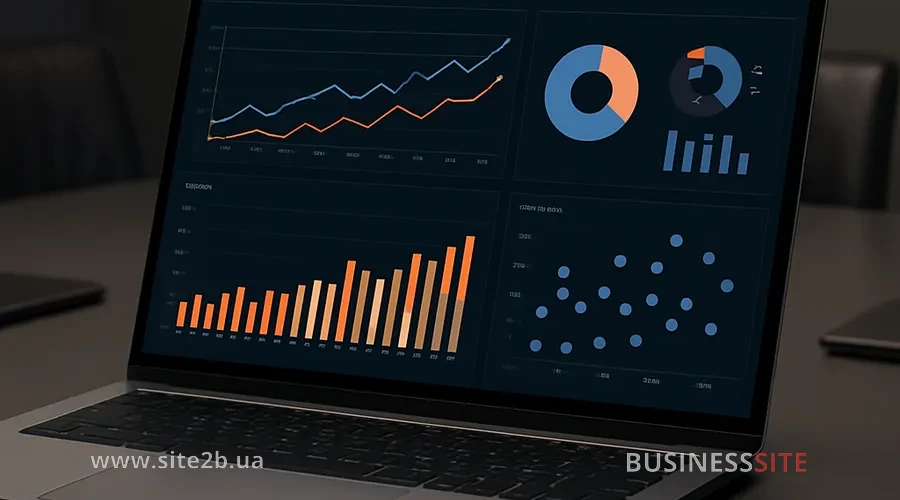
This is not a coincidence but a pattern: search engines assess how much a site deserves trust by analyzing the quantity and quality of external signals.
Off-site optimization is closely related to areas such as content marketing SEO, local SEO and social media marketing. Each of these tools reinforces the others: links and mentions generate referral traffic, reviews and ratings strengthen reputation, and social media activity increases brand awareness.
Off-Page SEO and On-Page SEO: management and results

Managing Off-Page SEO and On-Page SEO requires a comprehensive approach, as they affect the site from the inside and the outside, influencing its authority and positions in search results. It is important to understand the key differences and features of each method in order to effectively evaluate and improve the results of an SEO strategy.
Comparison of methods
On-Page SEO is work with internal factors: site structure, content optimization, loading speed, mobile adaptation. Here you fully control the process: at any time you can change the text, add keywords, or improve usability.
Off-Page SEO, on the contrary, depends on external resources: partner sites, customer reviews, activity on social networks. It is more difficult to manage these processes — you cannot directly “place” a link from an authoritative portal for yourself or force users to write positive reviews. But it is these external signals that form the site’s long-term authority and affect its search rankings.
Timelines and effects: what you need to know
In my observations, integrating both strategies is the only correct way to achieve maximum results. At BUSINESS SITE we always build comprehensive projects where internal and external factors work synergistically: this allows not only quickly gaining positions but also retaining them even in highly competitive conditions.
Link building for the website

Link building for the site is a targeted effort to attract external links that not only affect a resource’s visibility in search engines but also shape its reputation and user trust. A well-constructed link building strategy can attract organic traffic and strengthen the site’s positions in search results. Nevertheless, the key factor here is not so much the number of links as their quality and naturalness. Below we will look in detail at why the quality of acquired links is more important than their quantity today and how this affects the effectiveness of promotion.
Why quality is more important than quantity
In practice we at BUSINESS SITE have found: a single link from an industry portal with a high Domain Rating can give a greater boost in rankings than dozens of low-quality links. For a pharmaceutical company we worked with, implementing a guest posting strategy and publishing on niche resources increased the Domain Rating by 12 points in 6 months, which directly reflected in organic traffic growth.
Link building for business
- Guest blogging: publishing expert articles on thematic portals and blogs. This is not only a source of quality backlinks but also a way to make a name for yourself in the professional community.
- Competitor analysis: using tools like Ahrefs or SEMrush we regularly analyze the backlink profiles of niche leaders to identify new growth opportunities and find promising platforms for placement.
- Using UGC: we encourage clients and partners to create content mentioning the brand — reviews, overviews, case studies. Such content generates natural (organic) links and strengthens audience trust.
- Fixing broken links: we search for non-working links on third-party resources and offer to replace them with relevant pages of the client’s site. This method showed excellent results for a construction company when we restored more than 15 links from industry directories.
Monitoring the website’s backlink profile
The site’s external profile requires constant monitoring. We use Ahrefs to track the dynamics of backlink volume, identify toxic links, and analyze the dofollow/nofollow balance.
It’s important to maintain natural link growth: sudden spikes can raise suspicions with search engines and trigger filters. At BUSINESS SITE we always build strategies taking into account growth rates, relevance, and diversity of sources to minimize SEO risks when conducting aggressive link building.
Content Marketing for SEO

Content marketing for SEO: it is a strategy that involves creating valuable and relevant content to attract and retain a target audience, as well as to improve rankings in search engines. By using SEO optimization, content marketing becomes more effective, allowing you to increase organic traffic to the website and boost trust in the brand. Content marketing and SEO work closely together to address audience problems and remain visible in search results.
Content and Trust: How They Are Connected
Quality SEO content marketing is not just publishing texts, but creating materials that motivate the audience to share them, link to them, and discuss them. Search engines increasingly evaluate not only quantity, but also engagement, depth of development, and usefulness of the content.
Types of Content for Off-Page SEO
- Visual content: infographics, diagrams, presentations. Such content is often cited in industry publications, which increases the number of natural links.
- Video: instructional videos, reviews, interviews with experts. Video not only increases engagement but also generates links from video hosting platforms and blogs.
- User-Generated Content (UGC): reviews, comments, user-submitted reviews. According to BUSINESS SITE’s experience, UGC enhances trust and generates an additional stream of organic links.
- Influencer marketing: collaboration with opinion leaders who are willing to share your content with their audience. For an e-commerce project we ran a campaign with a Ukrainian blogger, which led to an increase in brand mentions and a 27% increase in referral traffic.
Content Strategy for Off-Page SEO
The strategy must be systematic: regularity of publications, relevance of topics, motivating the audience to interact (discussions, reposts, reviews). At BUSINESS SITE we always start with an analysis of the target audience’s interests and the competitive environment in order to create content that truly resonates and becomes a source of external signals for search engines.
Local Google SEO: profile setup and reputation
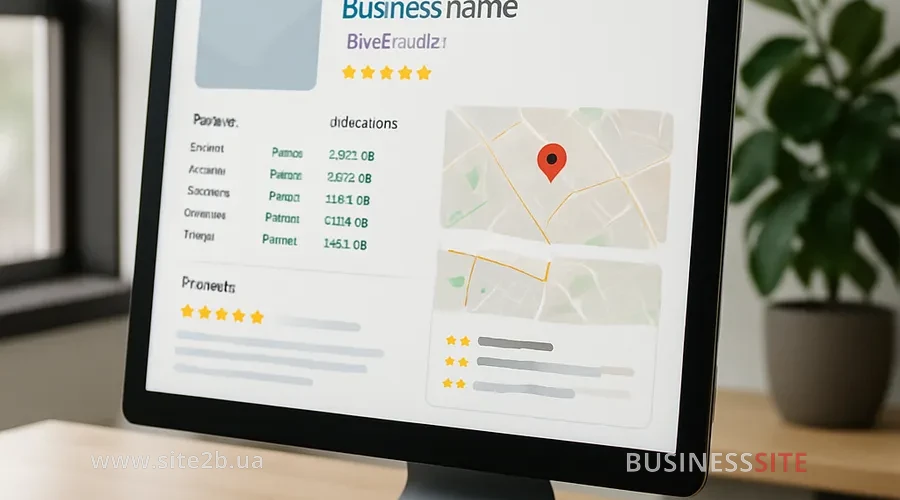
Local Google SEO, including profile setup and reputation, plays a crucial role in increasing the online presence of offline businesses. It helps small and medium enterprises become more visible to customers in their area and build trust, which directly impacts business growth. The importance of local SEO lies in its ability to attract targeted traffic and improve actual foot traffic to stores and services.
Why is local SEO important for offline businesses?
For businesses focused on the local market — for example, banks, construction companies, pharmacies, travel agencies — local SEO becomes one of the main channels for attracting customers. Optimizing the Google Business Profile, managing reviews, and presence on maps (Google Maps, Apple Maps) directly affect search visibility and potential customers’ trust.
Optimizing the Google Business Profile
- Filling in all data: address, phone, website, hours, description with relevant keywords.
- Regular updates: photos, news, promotions, answers to user questions.
- Encouraging customers to leave reviews: after a successful transaction or purchase we ask customers to share their impressions, which increases rating and trust in the brand.
Managing reviews and reputation (SERM)
This approach strengthens trust and protects the business from reputational risks.
Promoting an offline business through local SEO
Local SEO is not only online promotion but also real growth in offline sales. In our observations, companies that actively work with the Google Business Profile and reviews receive up to 35% more inquiries through maps and local search. For Ukrainian companies it is especially important to integrate local delivery services (for example, «Нова Пошта») and payment solutions (for example, «ПриватБанк», «Монобанк») into the profile description; this increases loyalty and conversion.
Social media marketing for SEO and branding
social media marketing plays an important role not only in strengthening the brand but also in improving SEO metrics. Using social platforms helps increase visibility, attract organic traffic and create an additional source of backlinks, which positively affects the site’s ranking in search engines.
Social networks in off-page SEO: why are they necessary?
In 2025 the audience of social networks in Ukraine continues to grow, and the platforms themselves are becoming a key channel for users to discover brands. Social media marketing for SEO: it’s not just about reach and likes, but about forming external signals: mentions, reposts, discussions that search engines take into account when ranking.
Impact of social signals on SEO
- Viral content: posts that are actively reposted and discussed become sources of new links and mentions.
- audience engagement: comments, likes, discussions — all this strengthens trust in the brand and signals to search engines its popularity.
- Strengthening the site’s reputation: regular activity on social networks forms the image of an open and authoritative brand, which positively affects search rankings.
How to combine content strategy and social media
At BUSINESS SITE we always build a unified strategy: content created for the blog or website is adapted for social platforms, and we encourage the audience to share and discuss it. This approach ensures the maximum Off-Page SEO effect and helps quickly scale brand awareness.
Monitoring and Managing Off-Page SEO Risks
Monitoring and management of Off-Page SEO risks are an integral part of successful promotion, since external factors have a direct impact on authority and site security. Without regular oversight of the quality of backlinks, brand mentions and social media activity, it is impossible to ensure sustainable growth and protect the resource from the negative consequences of unscrupulous practices. Competent risk management allows you not only to maintain high positions in search results but also to respond promptly to any threats to your site’s reputation.
Why continuous monitoring is necessary for security and growth
Effectiveness and ROI — what are they?
This approach enables informed decisions about scaling the strategy.
Scaling and its long-term effects
As the business grows, it is important to scale external optimization: expand the pool of partner platforms, launch new content projects, and strengthen presence on social networks. It is important to remember that Off-Page SEO produces long-term effects — results accumulate and provide sustainable growth even when search engine algorithms change.
Off-Page SEO for website growth
External site optimization is not a set of chaotic actions, but a systematic effort to build authority, trust and brand awareness. Link building, content marketing SEO, local SEO and social media marketing – four key strategies that in BUSINESS SITE have proven their effectiveness in practice.
Integration of Off-Page and On-Page SEO, constant monitoring, working with quality content and a healthy link profile – these are the foundation of sustainable growth and strengthening positions in search engines. In conditions of high competition and rapidly changing algorithms only a comprehensive approach allows not just to survive, but to outperform the market, creating a solid reputation and a steady flow of clients.
By implementing these principles, a business gains not only increased site visibility but also a long-term competitive advantage – this, I believe, is the main result of effective off-page optimization.
Rate the article: