In my experience, the key mistake is: attempting to find a universal recipe while ignoring the specifics of the business, seasonality, niche constraints, and real objectives. I am convinced that only a deep understanding of search marketing mechanisms and a sound strategy allow you not just to survive but to grow in conditions of high competition. In this article I will break down the difference between SEO and PPC, show the strengths and weaknesses of each approach, discuss SEM synergy, and share practical solutions that the BUSINESS SITE team applies to grow clients from various industries. If it is important for you to make decisions based on facts and experience, I recommend reading to the end: here you will find answers to the questions that truly concern executives and marketers.
SEO, PPC, SEM: fundamentals
SEO, PPC and SEM are key concepts in digital marketing that form the foundation of effective website promotion in search engines. Understanding their differences and interactions helps choose the right strategies to increase visibility, attract traffic, and grow conversions. Below we will examine search engine optimization and the principles of how SEO promotion of a website works.
Search engine optimization and how website SEO promotion works
Key SEO tasks:
- Technical optimization: page load speed, mobile optimization, correct structure, no duplicates and broken links.
- Content and semantics: creating expert, relevant and regularly updated content that answers the real questions of the target audience.
- Internal and external linking: a proper link structure within the site and development of the link profile to increase authority.
- UX and behavioral factors: navigation convenience, logical architecture, high page conversion.
- SEO audit and analytics: constant monitoring of rankings, traffic, errors, and analysis of effectiveness at the unit-economics level.
Contextual advertising (PPC): how it works and its features
PPC features:
- Quick start: traffic begins to arrive immediately after launching the campaign.
- Flexible settings: you can choose keywords, segment the audience, and use remarketing.
- Geotargeting: precise ad targeting to regions, cities, even individual districts.
- Transparent analytics: clear tracking of costs, clicks, conversions and ROI.
- A/B testing: the ability to quickly test hypotheses and adjust creatives.
The next step is mastering SEM, which combines the strengths of SEO and PPC to achieve maximum online visibility.
SEM: the combined use of SEO and PPC
Advantages of SEM:
- Channel synergy: paid advertising amplifies brand awareness, while organic search builds trust.
- Flexibility: you can quickly respond to seasonal spikes or launch new products through PPC while supporting organic growth.
- Cost optimization: a proper distribution of budget between SEO and PPC allows lowering the cost per lead and increasing LTV.
- Analytics and scaling: integrating data from different channels gives a complete picture of effectiveness and helps quickly adjust the strategy.
Advantages and limitations of SEO promotion
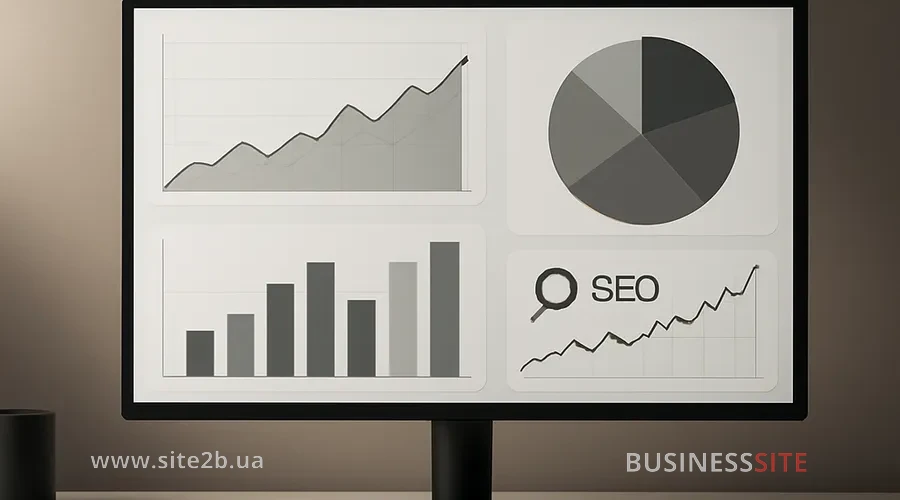
SEO promotion has powerful advantages, such as long-term results and increasing site visibility, as well as a number of significant limitations, including the need to wait a long time for results and dependence on changes in search engine algorithms. Even minimal efforts are often enough to maintain steady growth of organic traffic, but achieving high rankings quickly and reliably is impossible. These strengths and weaknesses of SEO optimization will be examined in detail in the following subsections.
Long-term SEO results and stability
SEO provides a steady flow of organic traffic that does not depend on daily spending. High-quality site optimization for search engines leads to increased user trust, lower cost per lead and higher conversion. This is especially noticeable for sites with a large number of pages and a complex structure: proper internal linking, content optimization and technical stability make it possible to get leads even years after changes are implemented.
Risks of penalties and search engine updates for SEO
SEO requires constant adaptation to changes in Google’s algorithms. The use of “black” or “gray” SEO (link manipulation, hidden text, clickjacking) leads to penalties and loss of rankings. Even well-intentioned sites can face traffic drops due to yet another search engine update.
When should you use SEO for a website?
SEO is especially effective:
- For sites with a large number of pages (online stores, catalogs, news resources).
- In niches with advertising restrictions (medicine, pharmaceuticals, financial services).
- For projects with a long-term strategy and high LTV.
- When it’s important to build trust and expertise in the eyes of the audience.
I recommend choosing SEO if you are ready to invest in site development, create expert content and work for the long term. For informational and news sites, SEO is practically the only path to growth.
Contextual advertising (PPC): opportunities and limitations

Contextual advertising (PPC) has a number of significant capabilities that allow businesses to quickly target their audience and effectively manage advertising campaigns. However, it also has limitations, such as the need for constant monitoring and high competition, which can affect the effectiveness and budget of advertising. In the context of PPC these factors are critical for achieving the desired results.
Product testing with PPC
Geotargeting and audience segmentation in contextual advertising
PPC allows you to precisely target ads to the required regions, cities, or even specific neighborhoods. This is especially important for local businesses — for example, travel agencies or banking services operating in particular areas.
Limitations and risks of contextual advertising across niches
In a number of industries (medicine, pharmaceuticals, gambling, financial services) there are restrictions on placing ads in Google Ads. In addition, high competition for popular queries leads to increased cost per click, and errors in campaign settings can lead to rapid budget burn without results.
Who is a PPC website suitable for?
PPC is optimal for:
- Startups and new projects that need to quickly get traffic and test demand.
- Seasonal products and services (for example, travel offers, holiday gifts).
- Companies operating in highly competitive niches where SEO requires long-term investment.
- Businesses with limited time to bring a product to market.
For SaaS projects, launches of new services and online stores, PPC becomes a driver of first sales and allows for rapid campaign scaling.
SEM strategy: combined use of SEO and PPC
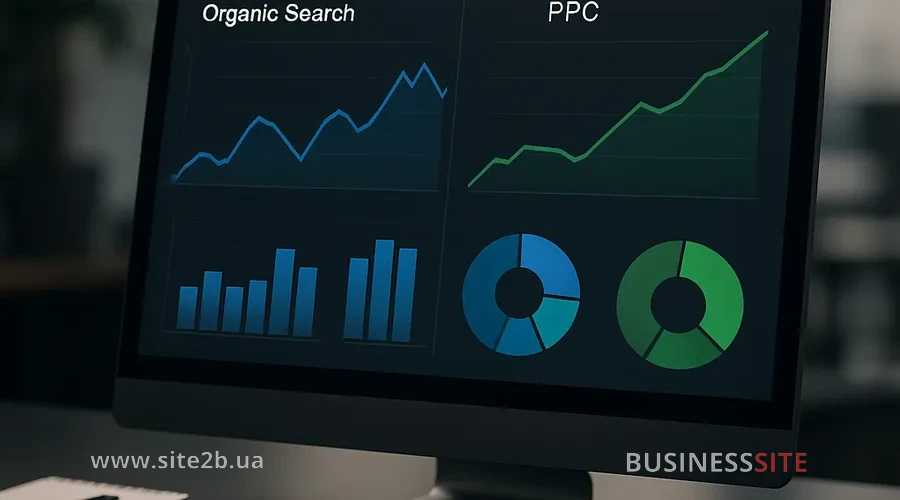
The SEM strategy of combining SEO and PPC brings together two powerful online marketing tools to achieve maximum visibility and promotion efficiency. Such a combined approach allows you to quickly attract traffic through paid advertising while simultaneously building long-term organic presence, significantly expanding audience reach and increasing brand recognition. Let’s look at the main advantages of using SEO and PPC together.
Benefits of a combined SEM approach
SEM as a strategy combines the strengths of SEO and PPC, allowing:
- Maximize reach: the site occupies more positions in search results, displacing competitors.
- Increase brand awareness: simultaneous presence in organic results and ads builds a consistent brand perception.
- Reduce customer acquisition cost: optimizing the budget between channels allows getting more leads for the same money.
- Increase conversions: users who see the brand in different formats are more likely to trust it and take desired actions.
Need for SEM specialists
SEM requires deep knowledge, experience, and continuous work with analytics. Managing combined campaigns is not just launching ads and writing articles, but integrating data, setting up end-to-end analytics, and regular testing and optimization.
Developing an SEM strategy for business
- Analyze keywords for SEO and PPC: look for overlap and unique opportunities for each channel.
- Set up end-to-end analytics: integrating Google Analytics, CRM and call tracking allows you to see the full customer journey.
- Use A/B testing: test hypotheses for creatives, landing pages and offers.
- Optimize the budget: reallocate funds between channels depending on seasonality, conversion and ROI.
- Continuously update content: fresh and relevant content strengthens organic rankings and improves the quality of landing pages for advertising.
SEO or PPC: which should you choose for your business?
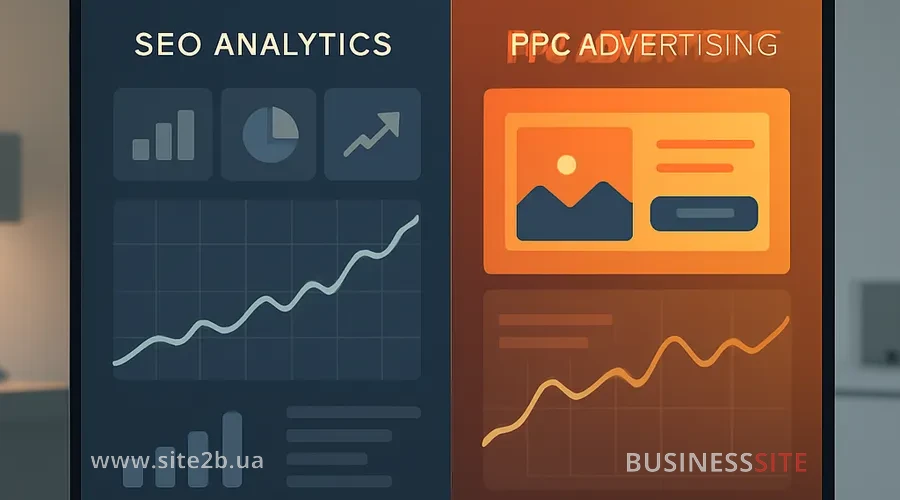
The choice between SEO and PPC is one of the key tasks for any business aiming to increase online sales and strengthen its market position. Each strategy has its own characteristics, advantages and limitations that should be understood to determine the most effective approach. Below we compare SEO, PPC and SEM by key parameters to help make an informed choice.
Comparison of SEO, PPC, and SEM by key parameters
| Parameter | SEO | PPC | SEM (combined approach) |
|---|---|---|---|
| Time to results | 3–6 months or longer | 1–7 days | Fast + long-term |
| Costs | Medium/high, but long-term | High, ongoing | Flexible allocation |
| user trust | High | Medium | Maximum |
| Need for experts | High | Medium/High | Very high |
| Impact on the site | Requires improvements, enhances UX | Does not directly affect | Requires integration |
| Targeting | Limited by geography and topic | Highly flexible | Flexibility + reach |
ROI of SEO and PPC: which is more effective?
SEO shows the highest ROI over the long term: investments pay off due to steady traffic and low lead cost. PPC is effective for quick launches and testing but requires ongoing spending and regular optimization. SEM allows flexible budget management, reduces risks and increases return on investment.
SEO and trust: how they affect conversions
Organic traffic gives users a sense of expertise and brand reliability. High search positions are associated with authority, which directly affects conversion and LTV. According to our data, sites with strong SEO receive on average 28% more repeat inquiries than projects that rely only on paid advertising.
For SEO specialists and entrepreneurs: differences between SEO, PPC and SEM
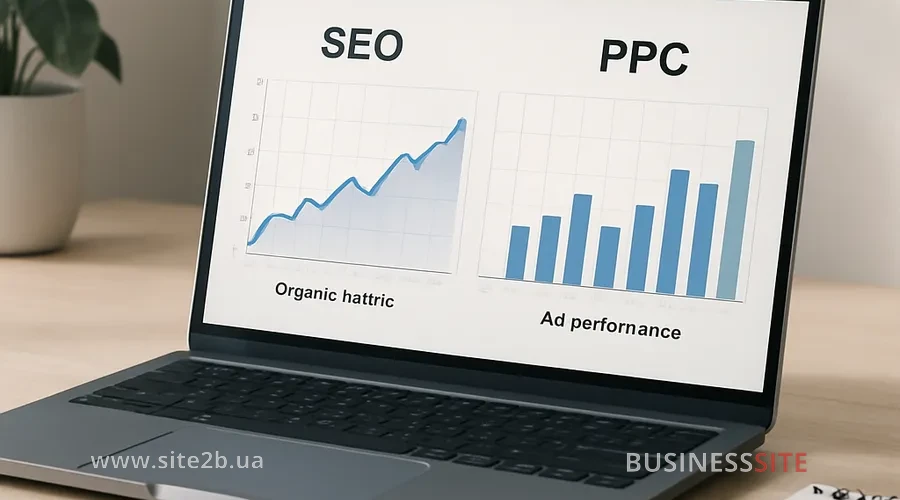
What are the main differences between SEO, PPC and SEM for business?
- SEO (Search Engine Optimization) — organic site promotion using content, structure and links. Long-term effect, but requires time.
- PPC (Pay Per Click) — paid advertising (Google Ads, Yandex.Direct), where you pay for each click. Quick results, but temporary effect.
- SEM (Search Engine Marketing) — combines SEO and PPC. It’s a comprehensive promotion strategy in search engines for maximum reach and conversion growth.
At the start, PPC is more effective — it provides immediate traffic and hypothesis testing. At the same time, you should start SEO optimization to build an organic flow in the future.
Formula: PPC → test demand and conversions → SEO → long-term growth without overpaying for clicks.
When is SEO more effective, and when is it better to use PPC?
- SEO is more advantageous for long-term strategies, content projects, and stable demand.
- PPC is better for new products, promotions, urgent customer acquisition, and market testing.
Often the optimal approach is to combine them: SEO provides stability, PPC — speed.
ROI formula:
ROI = (Revenue – Costs) / Costs × 100%
- For PPC ROI can be measured almost immediately — based on data on clicks, conversions and sales.
- For SEO ROI is calculated based on long-term results (6–12 months), taking into account the growth of organic traffic and the reduction of customer acquisition costs (CAC).
Yes, it’s the best strategy. The combination provides:
- Full SERP coverage (organic + ads).
- Increased CTR and user trust.
- PPC data helps refine keywords for SEO.
- Joint analytics improves the effectiveness of both strategies.
SERM (Search Engine Reputation Management) — managing a brand’s reputation in search engines. Includes promoting positive pages, displacing negative reviews, and shaping a positive company image.
SERM helps increase audience trust and protect the brand from reputational risks.
SEM allows you to occupy several positions on the first page by combining SEO and PPC:
- At the top of the page — paid ads (PPC).
- In the middle — organic results (SEO).
- In review blocks, maps and videos — rich snippets and brand content.
Thus the brand controls the maximum search space and reduces competitors’ chances of getting clicks.
SEO, PPC, and SEM for business: how to choose?
Rate the article: