
The Internet has long been a key battleground for consumer attention, and having a website that ranks high in search results has become vital for successful business operations. However, it is often possible to encounter a situation where, despite all efforts, your site remains invisible to users. In this article, I will discuss the five main reasons why your site does not appear at the top of search results and provide practical recommendations for addressing them.
You are not alone in this struggle. Search engine optimization (SEO) is a complex and multifaceted process that requires not only time but also deep knowledge. Mistakes that may seem insignificant can cause your site to remain invisible to potential customers.
In this article, I will discuss the five main reasons why your site does not appear at the top of search results and provide practical recommendations for addressing them. These are not just tips – this is your action plan to turn your site from invisible to unbeatable.
1. Lack of quality content
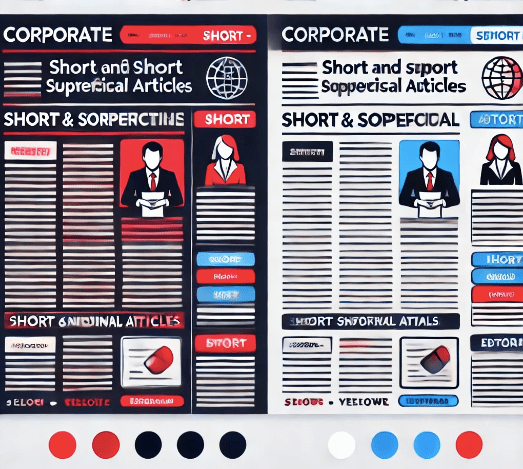
One of the main reasons why your site may not reach high positions in search results is the lack of quality content. Search engines like Google value sites that offer their users unique and useful content. If your site has few informative articles, or they are too superficial, then the chances of high ranking are significantly reduced.
How to fix:
- Increase the content volume on key pages to at least 500-1000 words. Generative neural networks like ChatGPT or Copilot can help with this.
- Create unique and useful materials that truly solve your users’ problems.
- Enrich the materials on your site with unique thematic images. Neural networks like Midjourney and DALL-E can also assist with this.
- Use various content formats: articles, videos, infographics, and guides.
2. Technical optimization issues
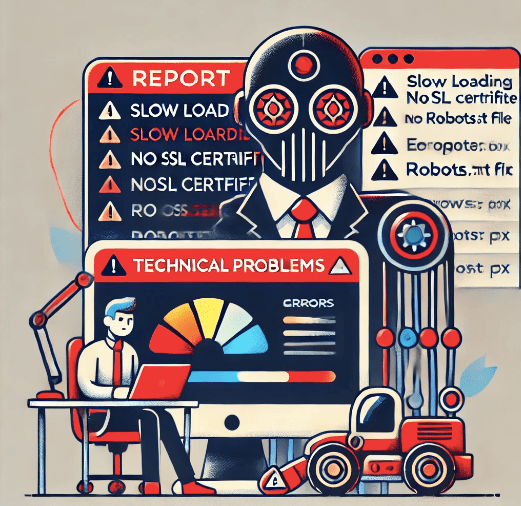
Technical aspects of the site play an important role in its ranking. Slow page loading, lack of an SSL certificate, errors in the robots.txt file, or the absence of a sitemap can negatively affect your site’s visibility in search results.
How to fix:
- Check the site’s loading speed using tools such as Google PageSpeed Insights.
- Ensure that your site uses HTTPS and SSL certificates.
- Set up correct meta tags and ensure that all pages are indexed properly.
3. Lack of backlinks

Backlinks are an important factor influencing SEO. They show search engines that other resources trust your content. Without quality and relevant backlinks, your site will have a hard time advancing to high positions.
How to fix:
- Create high-quality content that other sites will want to link to.
- Participate in guest publications on authoritative resources.
- Use tools like Ahrefs or SEMRush to analyze and improve your backlink profile.
4. Thin or duplicated content

Duplicated or “thin” content (content with low informational value) can negatively affect your site’s ranking. Search engines prefer pages with unique and valuable information.
How to fix:
- Conduct a content audit using tools like Screaming Frog to identify duplicates.
- Delete or update duplicated pages, creating unique and valuable content.
- Increase the volume and depth of existing materials.
5. Poor internal link structure

Internal links help search engines better understand the structure of your site and find important pages. If the internal link structure is poorly designed, it can complicate the indexing and ranking of your pages.
How to fix:
- Create a clear and logical internal link structure.
- Ensure that important pages have more internal links.
- Use relevant keywords in the anchors of internal links to improve SEO.
Additional tips for improving SEO
In addition to the main reasons, several additional factors can affect your SEO and search ranking.
Mobile optimization
Ensure that your site is optimized for mobile devices. Google uses mobile-first indexing, so sites that do not work well on mobile devices may lose positions in search results.
How to fix:
- Check the mobile version of your site using tools like Google Mobile-Friendly Test.
- Ensure that all site elements display and function correctly on mobile devices.
- Optimize the loading speed of the mobile version of your site.
Image optimization
Large images can slow down the loading of your site. Optimize images using lossless compression formats and set alt attributes for all images.
How to fix:
- Use tools for lossless image compression, such as TinyPNG or ImageOptim.
- Set alt attributes for all images to improve their indexing by search engines.
- Use modern image formats such as WebP to reduce file sizes.
Regular content updates
Search engines love fresh content. Regularly update existing articles and add new materials.
How to fix:
- Develop a content plan and stick to it.
- Periodically update old articles, adding new information and updating data.
- Invite guest authors and experts to create unique content.
Social signals
Social media activity can help improve SEO. Share your site’s content on social networks to increase its visibility and attract more visitors.
How to fix:
- Create and maintain active accounts on social networks.
- Regularly share your site’s content and engage with your audience.
- Use paid advertising campaigns on social networks to increase reach.
Using structured data
Structured data helps search engines better understand your site’s content and can improve its visibility in search results.
How to fix:
- Use Schema.org markup to add structured data to your site.
- Test the markup using Google’s structured data testing tool.
- Ensure that all data is correctly displayed in search results.
Conclusion
Regular audits and optimization of your site will help identify and fix issues that prevent it from achieving high positions in search results. The web studio BUSINESS SITE offers comprehensive SEO audit and optimization services that will help your site take a leading position in search engines.
Rate the article:





